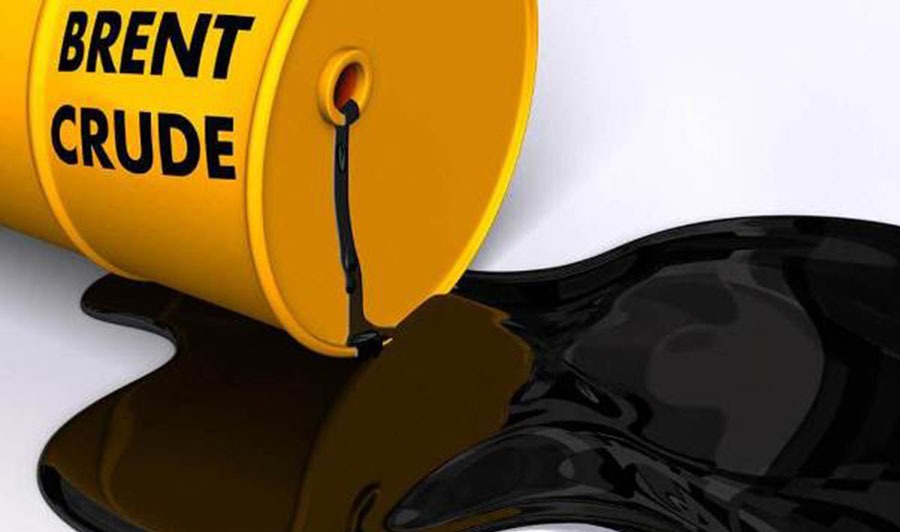
Brent crude oil held steady at $94.67 per barrel on Thursday while U.S. West Texas Intermediate (WTI) traded at $91.43 as the global oil market struggled to find direction amid escalating Middle East tensions and uncertainty surrounding diplomatic efforts.
Prices showed limited movement despite significant supply disruptions linked to the ongoing conflict involving the United States, Israel and Iran.
Market participants remain cautious as geopolitical risks intensify but expectations of a potential diplomatic resolution continue to cap further upside.
The Strait of Hormuz, a critical chokepoint for global oil shipments, remains under pressure with an estimated 13 million barrels per day of supply affected.
The disruption represents a substantial portion of global crude flows, raising concerns about sustained tightness in the market.
However, traders have refrained from aggressively pushing prices higher, reflecting skepticism over the longevity of the supply shock.
Analysts note that while the scale of disruption would typically trigger a sharp rally in oil prices, the current market environment is defined by conflicting signals.
On one hand, physical supply constraints suggest a tightening market. On the other hand, expectations that diplomatic negotiations could ease tensions have limited bullish momentum.
The muted price reaction highlights a broader uncertainty in the oil market, where geopolitical developments are being weighed against macroeconomic concerns and forward-looking expectations.
Investors appear reluctant to take strong directional positions, leading to range-bound trading despite elevated risks.
Market volatility has increased as traders react to headlines related to the conflict and any indications of progress in peace talks.
However, the absence of a clear resolution path continues to create a fragmented outlook, with short-term price movements driven more by sentiment than fundamentals.
The current pricing trend also reflects a disconnect between immediate supply risks and longer-term market expectations. While physical markets are experiencing pressure due to disrupted flows, futures markets suggest that participants anticipate a potential normalization if tensions de-escalate.
This divergence has introduced a layer of complexity for investors and policymakers, as traditional indicators of supply and demand are being overshadowed by geopolitical uncertainty. As a result, the oil market remains highly sensitive to developments in the Middle East, particularly any shifts in the status of the Strait of Hormuz.