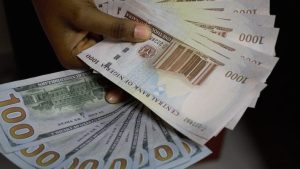
The Dollar to Naira black market exchange rate extended its upward movement on Friday, April 10th 2026, as sustained demand for foreign currency continued to weigh on the naira across Nigeria’s parallel foreign exchange market.
As of today, black market operators are buying the United States Dollar at ₦1,410 and selling at ₦1,420, reflecting a ₦10 spread between the buying and selling rates.
The increase indicates renewed pressure within the informal segment despite ongoing efforts by monetary authorities to stabilize the currency.
The Dollar to Naira exchange rate remains one of the most searched financial indicators in Nigeria due to its direct impact on importation costs, tuition payments abroad, international travel expenses, online foreign transactions and business settlements.
How Much Is Dollar to Naira Today in Black Market?
For individuals and businesses asking, how much is dollar to naira today in black market, the prevailing rates across key trading hubs such as Lagos, Abuja and Kano are:
- Buying Rate: ₦1,410 per $1
- Selling Rate: ₦1,420 per $1
Although slight variations may occur depending on transaction size and location, ₦1,410–₦1,420 represents the dominant trading band in the black market today.
The parallel market operates outside the official foreign exchange window supervised by the Central Bank of Nigeria. Official exchange rate data and monetary policy updates can be accessed directly through the apex bank’s website at https://www.cbn.gov.ng.
Despite reforms aimed at improving forex liquidity and attracting foreign exchange inflows, access to official dollar allocations remains limited for many individuals and small businesses. This structural imbalance continues to drive activity in the black market.
For structured daily updates and detailed analysis on the Dollar to Naira exchange rate, readers can visit https://investorsking.com for comprehensive financial reporting and forex market insights.
Market participants also monitor forex tracking platforms such as https://abokiforex.app/ to stay informed about real-time black market rate movements across Nigeria.
Dollar to Naira: Key Drivers Behind Today’s Increase
Several economic factors are shaping the current Dollar to Naira black market exchange rate:
1. Persistent Import Demand
Nigeria’s reliance on imported goods continues to generate consistent demand for foreign currency among manufacturers, traders and service providers.
2. Limited Official Forex Supply
Restricted access to official forex windows often redirects unmet demand into the parallel market, pushing rates higher.
3. Inflationary Pressures
Ongoing inflation weakens purchasing power and encourages some households and investors to hold dollars as a hedge against further naira depreciation.
4. Market Sentiment
Expectations regarding oil revenue performance, foreign reserves and macroeconomic policy direction continue to influence short-term exchange rate movements.
Official vs Black Market Exchange Rate
The official Dollar to Naira exchange rate is determined within regulated trading systems overseen by the Central Bank of Nigeria. However, discrepancies between official and black market rates often reflect structural supply-demand imbalances within the forex market.
While policymakers continue to introduce reforms aimed at strengthening reserves and stabilizing the naira, the parallel market typically reacts more quickly to real-time liquidity conditions.
The spread between official and informal rates remains a key indicator of overall forex market stability.
Outlook for the Naira
The future trajectory of the Dollar to Naira exchange rate will depend largely on foreign exchange inflows from crude oil exports, diaspora remittances and foreign portfolio investments. Expanding non-oil exports and improving domestic production capacity could reduce long-term demand pressure.
In the short term, however, sustained demand and liquidity constraints may continue to influence black market pricing.
As of Friday, April 10th 2026, the Dollar to Naira black market exchange rate stands at ₦1,410 for buying and ₦1,420 for selling, reflecting continued demand pressure within Nigeria’s foreign exchange environment.
For businesses, investors and individuals engaged in international transactions, monitoring daily Dollar to Naira movements remains essential for effective financial planning and strategic decision-making.