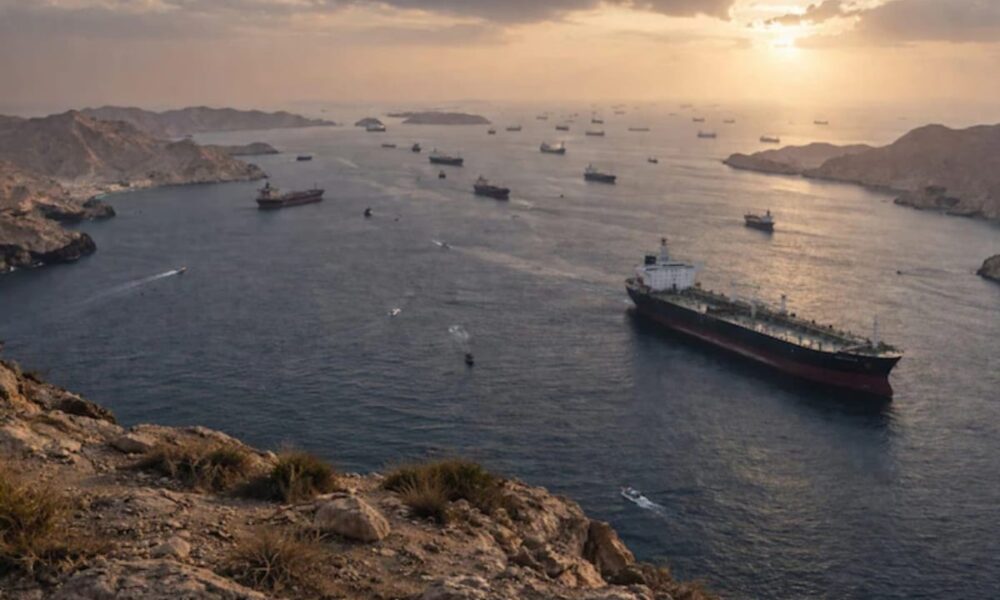
The global oil market is facing renewed pressure as tensions between the United States and Iran escalate, disrupting flows through the Strait of Hormuz, a critical maritime route responsible for about 20 percent of global crude and refined product shipments.
Iran has tightened control over the strategic waterway following ongoing geopolitical conflict and a sustained U.S. naval presence in the region.
Despite intermittent claims of reopening under ceasefire conditions, shipping activity remains significantly constrained, with vessel movement largely restricted and subject to heightened security risks.
The disruption has created a major bottleneck in global oil logistics as data shows that traffic through the Strait remains far below normal levels with many vessels delaying passage or reversing course due to safety concerns and conflicting navigation directives.
Market data indicates that oil prices have responded sharply to the uncertainty with Brent crude having surged by over 5 percent to trade near $95 per barrel as traders price in the risk of prolonged supply constraints and further escalation in the Middle East conflict.
The physical impact of the disruption is already visible across key consuming regions, particularly in Asia. Imports of crude oil and refined products have declined in several major economies, while fuel prices have surged.
In Singapore, jet fuel prices have more than doubled, reflecting tightening supply conditions and rising demand pressure.
Industry analysts warn that continued restrictions on the Strait of Hormuz could force refineries to reduce output in the coming weeks if supply flows are not restored.
The situation is compounded by logistical challenges, including stranded cargoes and limited alternative shipping routes, which reduce flexibility in global oil distribution.
According to Reuters data, as much as 13 million barrels per day of oil supply have been affected by the disruption, with hundreds of tankers currently stranded in the Gulf awaiting clearance or improved security conditions.
Even in a scenario where the Strait reopens fully, recovery is expected to be gradual. Restarting supply chains will depend on tanker availability, port operations, and the restoration of damaged infrastructure.
Analysts note that normalization of flows could take weeks or months, while some energy facilities impacted by the conflict may require years to return to full capacity.
The broader economic impact is also intensifying. Rising oil prices are fueling inflation concerns, pressuring currencies, and weighing on global equity markets.
Energy-importing nations face increased fiscal strain, while transportation and manufacturing costs are expected to rise if the disruption persists.
The Strait of Hormuz remains the central driver of current oil market volatility. Until there is a clear and sustained resolution between the United States and Iran, the risk premium on crude oil is likely to remain elevated, keeping markets highly sensitive to geopolitical developments.