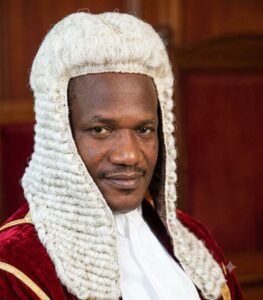
By Sola Adeola
Education is one of the most important measures of a nation’s commitment to its future. For Nigeria, however, the story of education, particularly tertiary education, has for years been marked by recurring strikes, unstable academic calendars, inadequate funding, poor infrastructure and declining public confidence. Students admitted for four-year programmes sometimes spent significantly longer in school because academic activities were repeatedly disrupted, while parents carried the financial and emotional burden of prolonged delays.
It was against this background that President Bola Ahmed Tinubu assumed office in May 2023. His administration inherited an education system in which uncertainty had become almost normal. The challenge was therefore not merely to build more classrooms or increase allocations, but to restore stability, access, affordability and confidence in the system.
Since then, the administration has pursued a number of interventions, including the Nigerian Education Loan Fund, NELFUND, engagement with education sector unions, improved remuneration for academic staff, TETFund-supported infrastructure, skills development and the deployment of recovered resources towards human capital development. The relative stability of universities and other tertiary institutions has also given students and parents a renewed sense that a four-year programme can, once again, realistically be completed within the expected period.
The significance of this development extends beyond the classroom. When students graduate on time, they can proceed to the National Youth Service Corps, enter the labour market earlier and begin contributing to the economy. When parents regain confidence in Nigerian universities and other tertiary institutions, the pressure to send their children abroad simply to avoid academic uncertainty may decline. And when recovered public resources are redirected towards educating young Nigerians, the country converts resources lost to wrongdoing into investments in its future.
This article therefore examines the education achievements of the Tinubu administration, not from the perspective that Nigeria’s educational challenges have disappeared, but from the argument that a process of restoring stability, expanding access and rebuilding confidence in the Nigerian education system is underway.
For many years, going to a Nigerian university or other tertiary institution was accompanied by uncertainty. A student could gain admission into a four-year programme without knowing whether the programme would actually take four years. The problem was not always academic performance. Sometimes, it was the academic calendar itself.
Prolonged strikes by university lecturers and other tertiary education workers could keep students at home for months. A student who should have graduated at 21 or 22 could find himself or herself still in school several years later. The consequences were enormous. Graduation was delayed. NYSC was delayed. Employment was delayed. Professional development was delayed. Parents continued paying expenses, and young Nigerians lost valuable productive years.
Perhaps the greatest damage was psychological. Students began to see prolonged strikes as part of the Nigerian tertiary education experience. Parents began to ask whether it was wise to invest heavily in a Nigerian institution when there was no certainty that their children would graduate on time. That loss of confidence was dangerous. A country cannot build a strong knowledge economy when its citizens do not have confidence in its education institutions.
One of the strongest arguments in favour of the Tinubu administration’s education record is the relative stability of universities and other tertiary institutions since May 2023. The administration has engaged the Academic Staff Union of Universities and other education sector stakeholders in an attempt to prevent disputes from degenerating into prolonged nationwide shutdowns.
In January 2026, the Federal Government and ASUU formally unveiled a renegotiated agreement designed to provide a framework for greater industrial harmony and predictable academic calendars. The Federal Ministry of Education described the agreement as an attempt to end the cycle of recurring strikes and prolonged academic disruptions.
This is important. The achievement should not be described inaccurately as saying that no industrial disagreement whatsoever has occurred since Tinubu assumed office. There have been disagreements and limited industrial actions. The more accurate and significant point is that Nigeria has avoided another prolonged nationwide shutdown of the magnitude that had become familiar in previous years.
That distinction matters. It means that students in universities and other tertiary institutions can increasingly plan. A student admitted to study medicine, law, engineering, accounting, education or any other discipline can have greater confidence that the academic calendar will not suddenly be suspended for many months.
And when a student completes a programme within the expected period, the consequences extend beyond the institution. The student can proceed to NYSC. The graduate can enter the labour market. The young person can begin building a career. The family can move on to the next stage of life. Time is one of the greatest resources in education, and recovering lost time is an achievement in itself.
There is a psychological dimension to this reform that deserves greater attention. For years, Nigerian students heard stories of people who entered tertiary institutions at one age and graduated several years later because of repeated disruptions. Today, there is growing hope that a student can enter a university, polytechnic, college of education or other tertiary institution and complete the programme within the expected period. That hope is important. A student who believes that the system will work is more likely to plan seriously for academic success.
A student who knows that graduation is reasonably predictable can begin preparing for employment, entrepreneurship, professional examinations or further education. The restoration of academic stability therefore has consequences far beyond the classroom. It restores the ability of young Nigerians to plan their lives. That is a significant achievement.
But perhaps the most important beneficiaries of this new stability, apart from students themselves, are parents. For years, many parents faced a difficult decision. Should they send their children to Nigerian tertiary institutions or spend considerably more money sending them abroad?
For some parents, the decision to send their children overseas was not necessarily because they believed foreign universities were always better. Sometimes, they simply wanted certainty. They wanted to know that a four-year programme would take approximately four years. They wanted to know when their children would graduate. They wanted to know when NYSC would begin. They wanted their children to enter the workforce at the expected time.
The fear of prolonged strikes therefore became one of the factors influencing some parents’ decisions to educate their children abroad. This is why the restoration of confidence in Nigerian universities and other tertiary institutions is so significant. Parents can increasingly look at the system and say: if my child gains admission, there is a greater chance that the child will finish on time. That is a profound change in perception.
And confidence in education can have an economic impact. When a Nigerian parent sends a child abroad, significant amounts of money leave the country through tuition, accommodation, transportation, feeding and other expenses. If parents regain sufficient confidence in Nigerian tertiary institutions to educate their children at home, more of that expenditure remains within the Nigerian economy.
The Nigerian institution receives the fees. Nigerian lecturers and other workers earn income. Local businesses benefit from student spending. Accommodation providers benefit. Transportation operators benefit. Food vendors benefit. The wider economy benefits.
Therefore, restoring confidence in Nigerian education can also become an economic policy.
This is not an argument against foreign education. There is tremendous value in international education, and Nigerians will continue to study abroad for many legitimate reasons. The issue is different. Going abroad should increasingly be a choice based on academic preference and opportunity, rather than a decision driven primarily by fear that a Nigerian tertiary institution may be disrupted indefinitely.
If Nigerian universities, polytechnics, colleges of education and other tertiary institutions can consistently provide stable academic calendars, quality teaching, adequate infrastructure and competitive research opportunities, parents can make decisions based on educational preferences rather than uncertainty.
This is why the administration’s effort to stabilise the tertiary education system deserves to be viewed as more than a labour relations achievement. It is an attempt to restore trust in a national institution. Academic stability alone is not enough. A student cannot complete tertiary education if he or she cannot afford to remain in school. This is where the Nigerian Education Loan Fund, NELFUND, becomes important. President Tinubu signed the Student Loans Access to Higher Education Act 2024, which established NELFUND as a body corporate and expanded its mandate to provide loans to qualified Nigerians for tuition, institutional charges and upkeep, as well as vocational and skills acquisition programmes.
The philosophy behind NELFUND is straightforward. A Nigerian’s financial background should not automatically determine whether that Nigerian can obtain higher education.
The programme has grown substantially. As of August 2026, the Federal Government reported that NELFUND had disbursed more than ₦303 billion to beneficiaries across public tertiary institutions over the preceding two years. That is a major intervention. It means that thousands of Nigerian students who might otherwise have struggled to finance their education now have another avenue of support. NELFUND therefore addresses another part of the education problem: access.
Academic stability addresses whether students can finish. NELFUND addresses whether financially constrained students can remain in school. Together, these policies create a stronger pathway: admission, financial support, continuous study and graduation.
Another particularly interesting aspect of the administration’s approach is the use of recovered resources to support national development. Nigeria has spent decades recovering money and assets associated with corruption and financial crimes. The question has always been what happens after the money is recovered.
If recovered proceeds can lawfully be channelled into education, the country achieves something powerful. Resources that were lost to corruption can be transformed into opportunities for young Nigerians.
The principle is simple: money lost by the country comes back to build the country. The President has stated that recovered proceeds are being used to support social investment programmes, including student loans, and has disclosed additional funding approval for NELFUND from funds recovered by the Economic and Financial Crimes Commission.
That policy deserves attention because it changes the narrative surrounding asset recovery. Recovery should not simply mean announcing that billions of naira have been recovered. Nigerians should ultimately be able to see the social benefit.
If recovered money helps educate a student, then the resource has returned to the Nigerian people in a productive form. The chain becomes recovery, education, skills, employment, productivity and development. That is a compelling public policy proposition. The broader discussion about dormant resources, including unclaimed dividends, also deserves careful consideration. Nigeria has had substantial amounts of unclaimed dividends and other financial resources sitting outside productive use for many years.
Any attempt to deploy such resources must, of course, respect the law and protect the rights of their legitimate owners. Unclaimed money does not automatically become government money. There must be proper legal safeguards, transparency and mechanisms through which legitimate owners can reclaim what belongs to them.
But where the law permits such resources to be mobilised productively, the principle is worth considering. Why should valuable resources remain dormant indefinitely if they can be safely and legally used to create opportunities while preserving the rights of their owners? Education is perhaps one of the best areas in which such resources can be invested. A dormant resource can become a student’s education. A student’s education can become a career. A career can become productivity. And productivity can strengthen the economy.
No education reform can succeed if it focuses only on students. The lecturer is at the heart of the university system, while teachers, instructors and other professionals are equally important across polytechnics, colleges of education and other tertiary institutions. For years, education sector workers complained about poor remuneration, unpaid allowances, inadequate research support and other conditions that contributed to industrial unrest and the migration of academics abroad.
The Tinubu administration’s renegotiated agreement with ASUU includes a 40 per cent upward review of academic staff remuneration effective January 2026, alongside other measures intended to improve academic welfare and research. This is important because industrial harmony cannot be achieved simply by asking lecturers not to strike. The conditions that produce industrial unrest must also be addressed.
If lecturers are better supported, the academic environment becomes more stable. If they have better opportunities for research and professional development, tertiary institutions become more competitive. If their legitimate financial concerns are addressed promptly, the incentive for industrial action can be reduced.
This is therefore not simply a salary issue. It is an education quality issue.
The administration has also introduced measures beyond academic salaries. The Federal Government has reported disbursements under the Tertiary Institutions Staff Support Fund to academic and non-academic staff across public tertiary institutions.This is significant because education workers themselves are part of the human capital infrastructure of the country. A government that wants a stable education system must think about the welfare of the people who operate that system.
There is also a physical component to the education agenda. The administration has continued to use TETFund interventions to support tertiary institutions with classrooms, libraries, laboratories, hostels and other facilities. In May 2026, President Tinubu commissioned several TETFund-supported projects across tertiary institutions, including a science complex, classrooms, a students’ hostel and facilities supporting research and technical education. This matters because academic stability without an adequate learning environment is not enough. A student may attend lectures regularly, but if the institution lacks functional laboratories, adequate classrooms, libraries, hostels and research facilities, the quality of the education remains compromised.The administration has therefore been attempting to address both sides of the equation: keeping students in school and improving the environment in which they learn.
Another important aspect of the administration’s approach is its recognition that Nigeria’s economy does not need university graduates alone. The country also needs technicians, artisans, engineers, mechanics, software developers, electricians, builders, laboratory technicians and other skilled workers. That is why investment in polytechnics, colleges of education, technical institutions and vocational training matters. The education system must eventually move beyond the mentality that university degrees are the only respectable route to success. A modern economy requires different forms of knowledge and skills. The plumber, electrician, technician, software developer, nurse, teacher, engineer, scientist and entrepreneur all contribute to national development. Education is often discussed as though it were separate from the economy. It is not. Education produces the workforce. The workforce produces goods and services. Those goods and services generate economic activity. Economic activity creates jobs and revenue. That is why education is ultimately an economic investment.
Nigeria’s greatest long-term resource is its people. Oil can be depleted. Mineral resources can be exhausted. Infrastructure can deteriorate. But an educated Nigerian can continue creating value for decades. Education also has implications for national security. A young population without meaningful educational and economic opportunities can become vulnerable to criminal recruitment, extremist indoctrination, cultism and other forms of social instability. That does not mean education automatically prevents crime. It does mean that human capital development is part of the broader architecture of national resilience. A young person who has access to education, skills and legitimate opportunities has more pathways available than a young person who feels completely excluded from society. Education therefore belongs in conversations about economic development and security at the same time.
This is where the education record of the Tinubu administration becomes particularly interesting. The most important achievement may not ultimately be the amount spent. It may not even be the number of student loans approved. It may be confidence.
A student can now look at tertiary education with greater hope that graduation will come when it should. A parent can look at a Nigerian university, polytechnic, college of education or other tertiary institution and have greater confidence that the child will not spend unnecessary years at home because of a prolonged nationwide strike.
A lecturer can have greater confidence that agreements reached with government will be implemented. A financially disadvantaged student can have greater hope that lack of immediate funds will not automatically end an educational journey. And a parent who previously considered sending a child abroad simply to avoid uncertainty can reconsider that decision.
That is a significant shift.
A credible assessment must also acknowledge that Nigeria’s education problems have not disappeared. Universities and other tertiary institutions still require better infrastructure. Research funding remains a major concern. Lecturers and other education workers need continued improvement in welfare and working conditions. The quality of teaching must continue to improve. Graduate employability must receive greater attention. Technical education needs more prestige and investment. NELFUND must remain transparent, sustainable and properly administered. And the government must continue engaging education sector unions before disputes become crises.
The present stability must not be treated as a temporary political achievement. It must become institutionalised. The real test will be whether future administrations inherit a system in which prolonged nationwide strikes are no longer regarded as normal.
For too long, Nigerian education policy was often about managing crises. How do we end the strike? How do we pay the lecturers? How do we reopen the institutions? How do we deal with the backlog? How do we get students back into classrooms?
The country must now move beyond crisis management. The next question should be: how do we build universities and other tertiary institutions that Nigerians are proud to attend?
That means stable academic calendars, properly paid lecturers, strong research institutions, modern laboratories, functional libraries, adequate accommodation, digital learning, vocational training and a financing system that makes higher education accessible. The Tinubu administration has laid some foundations. The responsibility now is to build on them.
There is something profoundly important about allowing a young Nigerian to plan. A student who enters university at 18 should be able to imagine graduating at 22. At 22, the student should be able to undertake NYSC. After NYSC, the graduate can seek employment, establish a business, pursue professional qualifications or continue into postgraduate education. That is how a normal education system should function. When strikes and disruptions repeatedly interrupt that process, the entire life trajectory is affected. When stability returns, time returns. And when time returns, hope returns. That is why the restoration of academic stability should not be dismissed as merely an administrative matter. It is a social achievement. It is an economic achievement. It is a human capital achievement. And, ultimately, it is a national development achievement.
The education record of the Bola Ahmed Tinubu administration should be assessed against the difficult circumstances it inherited. Nigeria’s universities and other tertiary institutions had endured years of prolonged strikes, unstable academic calendars, inadequate funding, infrastructure deficits and declining public confidence. These challenges did not disappear with the change of administration, and it would be unrealistic to suggest that they have. However, important changes have taken place.
The relative stability of universities and other tertiary institutions has given students something they had increasingly lost: the confidence that they can start a programme and finish it within a predictable period. That confidence extends to parents, many of whom can now look at Nigerian tertiary institutions with greater assurance that their children’s education will not unnecessarily be interrupted for months or years.
NELFUND has introduced a new dimension to access by providing financial support to students in universities, polytechnics, colleges of education and other eligible tertiary institutions who might otherwise struggle to afford higher education. At the same time, improved remuneration and welfare arrangements for academic and other tertiary education staff address an important part of the problem. Academic stability cannot be sustained without taking seriously the welfare and professional needs of those who teach, train and conduct research.
The decision to use recovered resources to support education is equally significant. When resources lost through corruption are recovered and redirected towards educating Nigerian youths, yesterday’s loss can become tomorrow’s human capital. Yet, the work is far from finished. Nigeria still needs better infrastructure, stronger research funding, improved teaching quality, sustainable student financing, better technical and vocational education, and continued engagement between government and unions representing workers across the tertiary education sector. The present stability must become institutional rather than temporary.
Ultimately, the greatest achievement may not be measured in naira, the number of projects commissioned, or the number of loans disbursed. It may be measured in confidence. A student who believes that admission can lead to timely graduation has hope. A parent who believes that a child can obtain a degree or other tertiary qualification in Nigeria without losing years to disruption has confidence. A lecturer who believes that legitimate concerns can be resolved through dialogue has greater reason to remain committed to the system.
Nigeria’s educational problems have not disappeared, but Nigerians are beginning to believe again that their universities and other tertiary institutions can work. And restoring that belief may ultimately prove to be one of the most important foundations for the country’s human capital development and future prosperity.
Sola Adeola
Governance, Security and Public Affairs Analyst
08071313200
[email protected]