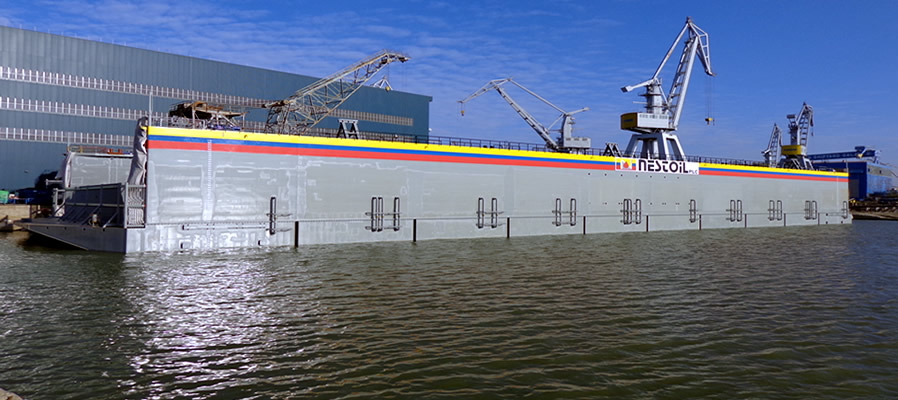
Nestoil Group has returned a drilling rig to productive operation after about eight years of inactivity, using the equipment to raise crude oil output from Oil Mining Lease 42 as the Nigerian energy company moves to extract more barrels from the mature Niger Delta asset.
The Pathfinder 500 has completed workover operations on two producing wells at OML 42, its first productive assignment since it was acquired roughly eight years ago.
The intervention resulted in additional crude production from the wells, although Nestoil did not disclose the number of barrels added following the operation.
The development represents an important step in the company’s wider plan to increase production from OML 42 by improving existing wells before expanding into further in-field drilling.
Rather than relying entirely on newly drilled wells to increase output, Nestoil is seeking additional production from infrastructure already available within the field.
Workover programmes allow operators to intervene in existing wells to address production problems, restore declining output or improve the volume of hydrocarbons that can be recovered.
For mature Nigerian oil assets, such interventions can provide a faster route to additional production than beginning entirely new exploration programmes.
Nestoil carried out the latest campaign through Scorpio Drilling International, its drilling services business.
Pathfinder 500 was moved to OML 42 for the two-well programme before being returned to base following completion of the operations.
The company said the entire campaign was completed without a health, safety or environmental incident.
The return of the rig is particularly significant because the equipment had remained unused for approximately eight years following its acquisition.
Pathfinder 500 was purchased alongside another rig, Scorpio 300, under a combined investment estimated at about $28 million.
Bringing the equipment into productive use allows Nestoil to begin extracting operational value from an investment that had remained largely dormant while reducing its dependence on externally hired drilling equipment.
The strategy could also give the company greater control over the timing and cost of future well interventions.
Rig availability can influence how quickly upstream companies respond when producing wells require substantial intervention, particularly in an operating environment where suitable equipment can be expensive to secure.
Nestoil’s ownership of drilling equipment therefore creates an internal route for carrying out workovers, restoring ageing wells and eventually drilling additional wells.
The company is already preparing to move beyond the recently completed intervention.
Following the Pathfinder 500 campaign, Nestoil plans to advance an in-field drilling programme at OML 42 as it seeks to sustain and increase production from the asset.
That programme could become more consequential than the initial two-well workover if additional drilling successfully brings new barrels into production.
OML 42 is one of Nigeria’s long-producing Niger Delta assets and has undergone several phases of redevelopment since indigenous investors entered the field.
Nestoil has exposure to the asset through Neconde Energy and has continued investing in the infrastructure required to maintain production from the block.
The latest operation also highlights the increasing technical role of Nigerian companies in an upstream industry historically dependent on international operators and foreign oilfield-service providers.
Nestoil said Pathfinder 500 was refurbished, mobilised and operated by Nigerian personnel, with the rig currently carrying a fully Nigerian crew.
Scorpio Drilling International now operates Pathfinder 500 and Scorpio 300 and can deploy the equipment for Nestoil’s requirements as well as provide drilling services to other operators.
The additional capacity comes as Nigeria seeks to sustain the recovery in national crude production through investment in existing fields, new drilling programmes and the restoration of previously constrained output.
For upstream operators, higher crude prices alone cannot produce additional barrels where ageing wells, inadequate infrastructure and insufficient drilling investment limit production.
Increasing the number of productive wells and extracting more crude from existing assets will therefore remain critical to Nigeria’s ability to translate favourable international oil prices into higher export volumes and government revenue.