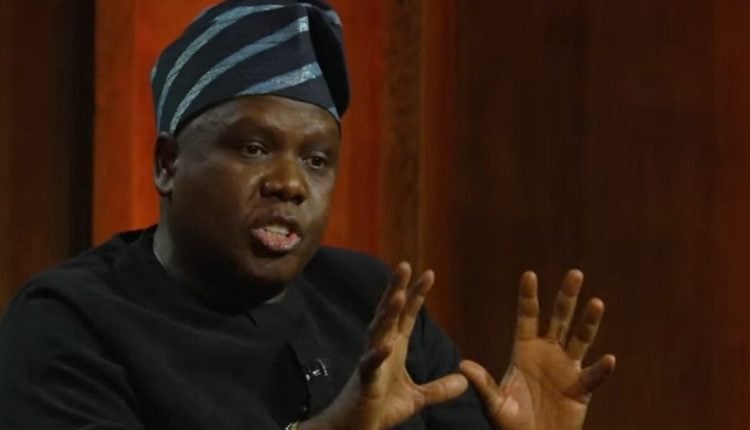
Special Adviser to President Bola Tinubu on Media and Policy Communication, Daniel Bwala, has claimed that Nigeria would have been “overrun” by terrorists if not for what he described as the resolute interventions of the Tinubu administration.
Bwala said the security challenge inherited by the government was compounded by the spread of terrorist organisations across the Sahel, arguing that the scale of the threat required a combination of domestic security operations, military intervention and international cooperation.
He made the claim on Thursday during an exclusive interview on Eagle 102.5 FM, Ilese-Ijebu, monitored by DAILY POST in Abeokuta.
According to him, the movement of terrorist groups across the Sahel had created a wider regional security problem that threatened to spill deeper into Nigeria, particularly through the country’s northern borders.
“Let me be very honest with you, my brother, and your listeners. The God of heaven that we serve is a witness. Were it not for the various intervention of Bola Ahmed Tinubu, Nigeria would have become a sorry state security-wise,” he said.
Bwala said the presence and movement of terrorist organisations in the Sahel had created an additional layer to Nigeria’s existing security problems, with groups he identified as ISIS and the Taliban among those operating within the wider region.
According to him, the influx had increased the pressure on Nigeria’s security architecture as these groups sought opportunities to establish themselves and extend their activities into different parts of the country.
“I am sure that if you are familiar with reports that came out globally, it says that, and you can Google that, you will see it, the Sahel areas where you have these insurgents from all over the world, they are moving to the Sahel, terrorists, Taliban, ISIS, all of them, these Sahel areas are here in Africa,” Bwala added.
He said the administration’s response had involved stronger international partnerships alongside the deployment of Nigeria’s own security agencies, insisting that the scale of the threat made decisive action necessary.
“Now, when you have this ISIS at our navel, if not because of the resoluteness of this government, Nigeria would have been overrun,” he observed.
The presidential aide maintained that although insecurity remained a serious concern in some local government areas, the overall security environment had changed sufficiently for government institutions to operate more effectively in places that were previously vulnerable to attacks.
Bwala said the persistence of such incidents remained a serious concern, but argued that the government’s response should also be assessed through its counter-terrorism operations and the extent to which security forces had been able to prevent armed groups from taking over larger territories.
He, however, argued that the Federal Government could not bear the entire responsibility for Nigeria’s security challenges, insisting that state and local governments must also play a more active role.
Bwala said governors needed to do more to support security agencies and address threats within their jurisdictions, arguing that the Federal Government could not be expected to respond effectively to every localised security incident across the country.