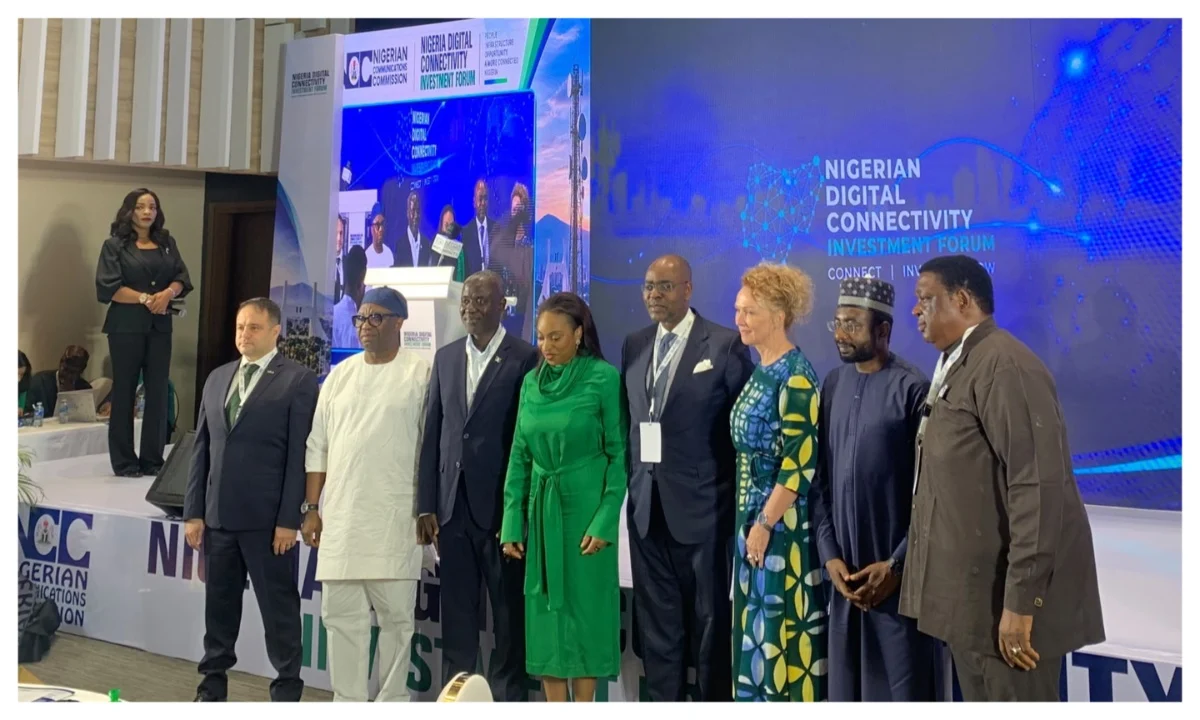
The Minister of Industry, Trade and Investment, Dr Jumoke Oduwole, has called for increased investment in digital infrastructure.
She said connectivity must translate into productivity and tangible economic opportunities for Nigerians and businesses.
Oduwole made the call on Tuesday in Abuja at the opening of the Nigeria Digital Connectivity Investment Forum, organised by the Nigerian Communications Commission, NCC, in partnership with Swedfund and Ookla.
The minister described digital infrastructure as a critical component of the investment climate, business competitiveness and international trade, stressing that the conversation must extend beyond telecommunications to infrastructure required to produce, connect, invest and trade.
She noted that fibre networks, data centres, cloud infrastructure, digital platforms, electronic payments and secure data systems were now as important to the movement of goods, services, capital and information as ports, highways, rail corridors and shipping routes.
“When we speak of trade, we often think about ports, highways, rail corridors, and shipping routes. Those investments remain essential, but the nature of trade has changed,” Oduwole said.
The minister pointed to software developers serving foreign clients, fashion entrepreneurs using digital marketplaces, financial technology companies processing cross-border payments and manufacturers managing African supply chains through digital systems as examples of Nigerians already participating in international trade.
Africa’s digital economy, she added, represented a major investment opportunity, with mobile technologies and services contributing about $240 billion to the continent’s economy and supporting approximately 13 million jobs in 2025.
In Nigeria, telecommunications accounted for more than nine per cent of Gross Domestic Product (GDP) in the first quarter of 2026.
Oduwole also referenced a World Bank and Global System for Mobile Communications Association (GSMA) study which found that extreme poverty among Nigerian households declined by about seven per cent after two or more years of mobile broadband coverage.
The growing demand for digital services has also accelerated investment in data centres, with Nigeria now having more than 25 facilities operational or under construction.
Global investment in data centres reached about $500 billion in 2024, driven by cloud computing, artificial intelligence and rising demand for digital services.
But Oduwole cautioned that infrastructure alone would not deliver economic benefits unless businesses could use connectivity to reach markets, make payments, comply with regulations, move data securely and provide services across borders.
“Connectivity must translate into economic opportunity,” she declared.
She linked this objective to the African Continental Free Trade Area (AfCFTA), warning that Africa could not achieve a truly integrated market if physical borders became easier to cross while digital borders remained fragmented.
Nigeria, according to her, has taken steps towards implementing the AfCFTA Protocol on Digital Trade after being designated a co-champion of the protocol in February 2025 and becoming its first state party to ratify it.
The Federal Government has also mapped Nigerian digital service providers across 17 sectors to assess their capabilities, export potential and barriers to accessing African markets.
Oduwole further disclosed that Nigeria was among the first three pilot countries implementing the African Digital Access and Public Infrastructure for Trade (ADAPT) initiative, alongside Kenya and Morocco.
The initiative is designed to improve interoperability in digital identity, cross-border data exchange and payment systems.
For investors, she urged a broader view of Nigeria beyond its large consumer market, stressing its potential as a platform for serving the wider African market.
“The opportunity spans data centres, cloud services, fibre, broadband infrastructure, digital platforms, fintech, cybersecurity, artificial intelligence, digital logistics, and digitally delivered services,” she said.
Oduwole called for greater policy predictability, regulatory coordination and partnerships between government, the private sector and development partners to support sustainable investment.
In his welcome remarks, the Executive Vice Chairman and Chief Executive Officer of the NCC, Dr Aminu Maida, said the forum came as Nigeria marked 25 years of GSM and provided an opportunity to examine the investment required for the next phase of connectivity.
Maida disclosed that Nigerians consumed about 1.66 million terabytes of data in July 2026, up from 1.13 million terabytes a year earlier, representing an increase of almost 47 per cent.
“Keeping pace will require sustained investment, both to expand networks and to improve the experience of people already connected,” he said.
The NCC chief noted that the commission was using network performance data, consumer complaints and other market information to identify service gaps and areas requiring investment.
He urged participants to use the two-day forum to identify viable projects and confront the obstacles limiting investment.
“Bring forward the projects you believe in, and tell us what is holding them back. Challenge the assumptions where you think they need testing,” Maida added.