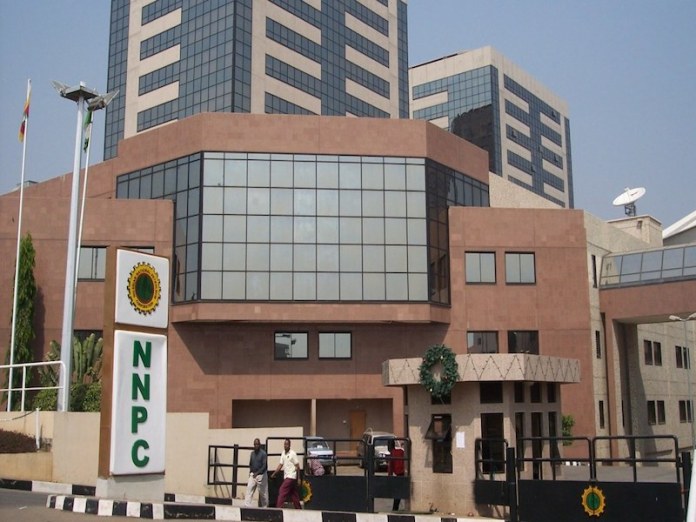
The Nigerian National Petroleum Company Limited has said it will not commit additional resources to the rehabilitation of its state-owned refineries until it establishes a credible route to sustainable and profitable operations.
The decision signals a tighter commercial approach to the Port Harcourt, Warri and Kaduna refineries after years of rehabilitation programmes that failed to deliver sustained production.
NNPC Group Chief Executive Officer Bayo Ojulari said the company is restructuring its approach around profitability, operational sustainability and greater financial responsibility from prospective partners.
Under the emerging model, NNPC wants technical partners to invest alongside the national oil company and share directly in the commercial performance of the refineries rather than operate primarily as contractors paid to execute rehabilitation work.
The strategy represents a departure from previous arrangements under which NNPC carried the financial burden of rehabilitation, financing, operations and maintenance while contractors had limited exposure to the long-term performance of the facilities.
Ojulari said NNPC had concluded that committing additional capital without establishing how the refineries would generate sustainable returns would repeat weaknesses identified in earlier rehabilitation programmes.
The company therefore wants future investment tied to a business model capable of supporting operations from internally generated revenue and competing commercially with other refiners.
NNPC Stops Using Crude to Finance Repairs
One significant change involves how rehabilitation expenditure is funded.
Ojulari disclosed that NNPC stopped using crude oil to pay for refinery rehabilitation last year after determining that the arrangement was consuming resources without producing sufficient commercial returns.
He linked part of the improvement in the company’s 2025 financial performance to expenditure and crude volumes that were no longer being committed to arrangements producing weak economic outcomes.
NNPC reported a 33 percent increase in profit after tax to N7.2 trillion for 2025 from N5.4 trillion in 2024 despite a 24 percent decline in revenue to N34.5 trillion.
Operating cash flow increased 16 percent to N12.8 trillion, while EBITDA rose 22 percent to N18 trillion. The company also declared a N5.8 trillion dividend, 35 percent higher than the previous year.
The refinery strategy therefore forms part of a wider effort by NNPC to improve returns from its assets and reduce expenditure on operations that cannot demonstrate a path towards creating economic value.
Chinese Partners Conduct Refinery Assessment
NNPC is currently exploring technical equity partnerships for the Port Harcourt and Warri refineries.
In May, the company signed a memorandum of understanding with China’s Sanjiang Chemical Company Limited and Xinganchen (Fuzhou) Industrial Park Operation and Management Co. Ltd.
The proposed partnership covers outstanding rehabilitation work, operation and maintenance, possible expansion of the refineries and development of additional petrochemical and gas-based industrial capacity.
The two companies emerged from a selection exercise that initially considered more than 50 prospective partners before NNPC reduced the pool to about 20.
Technical teams subsequently conducted an intensive assessment of the facilities over approximately three months as NNPC sought to establish their condition and determine the investment required to return them to competitive operation.
The assessment has also forced NNPC to reconsider some earlier rehabilitation plans.
According to Ojulari, proceeding with some of the previous configurations could leave the facilities technologically behind modern refineries even after rehabilitation.
NNPC is consequently examining newer technology, process optimisation and petrochemical integration as part of its effort to develop a commercially competitive operating model.
No Final Agreement Yet
Despite the progress with the Chinese companies, NNPC has not concluded a final technical equity partnership.
The existing agreement allows the prospective partners to conduct technical assessments and develop proposals.
Commercial and technical negotiations would follow the completion of that process before any definitive investment arrangement is reached.
The Port Harcourt and Warri refineries are currently the focus of the technical-equity process, while Kaduna has yet to reach the same stage.
For NNPC, the central condition is now whether the refineries can operate as commercially sustainable businesses.
The company says additional rehabilitation spending will proceed only when there is a structure under which the facilities can generate returns, sustain their own operations and give technical investors direct financial exposure to their performance.