Advertisement
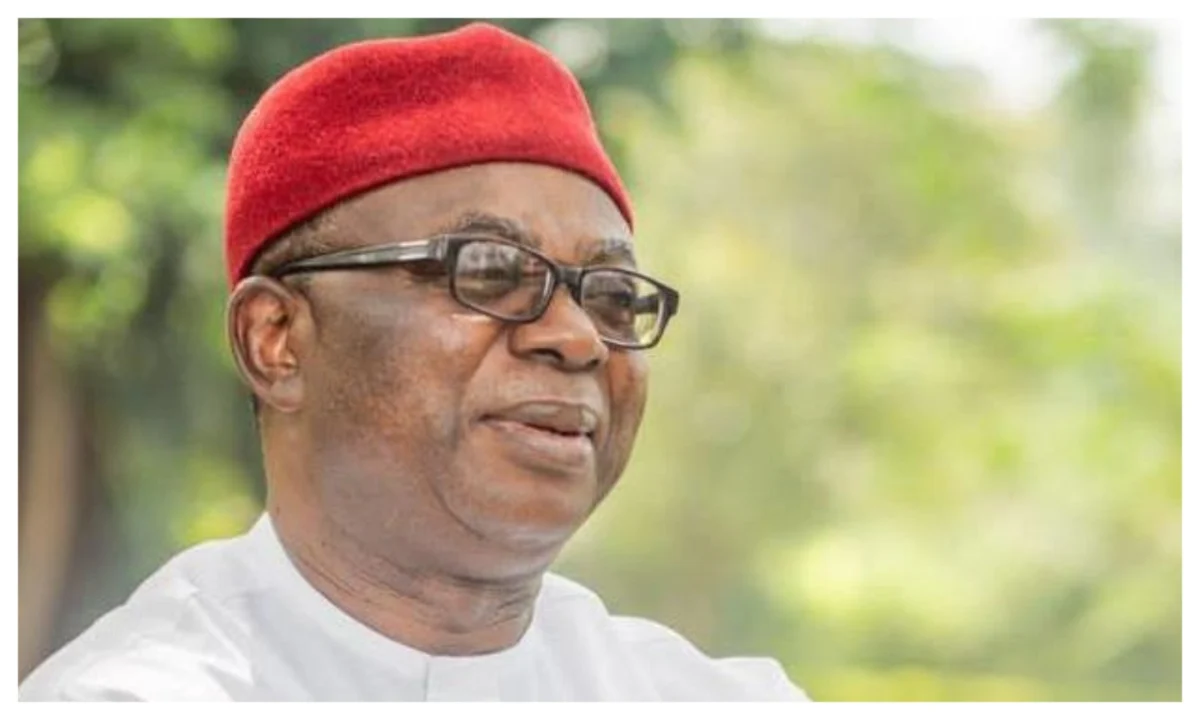
A former two-term member of the National Assembly, Sam Onuigbo, has tasked Nigerians to hold state governors responsible as economic hardship persists in the country despite the huge financial inflows accruing to them from the removal of the petroleum subsidy.
Advertisement
Onuigbo, the sponsor of Nigeria’s Climate Change Act 2021, made the assertion in a statement in Abuja at the weekend, insisting that state governors should be equally magnanimous in allowing local government councils to receive their due share.
Recall that state governors under the present dispensation have, on different occasions, admitted that states have never had it so good in terms of increased revenue as under the current Tinubu administration.
Advertisement
However, noting that only Governors Babagana Zulum of Borno State and Babajide Sanwo-Olu of Lagos State allow the various local government councils in their states to receive the full value of FAAC funds directly, Onuigbo frowned at the continued use of Joint Account Committees (JACs) by state governors to stifle council chairmen.
Onuigbo, who is also a former Finance Commissioner in Abia State, lamented that while the Federal Government gets 52.68 per cent, state governments receive 47.32 per cent of the revenue (26.72 per cent for states and 20.60 per cent for local governments) from the FAAC without allowing the councils to access the 20.60 per cent that should constitutionally go to them.
Advertisement
Wondering where the huge revenues available to state governors, especially the portion belonging to local governments, go, the former two-term federal lawmaker argued that denying local governments the funds they need contributes to the general economic downturn, leading to unemployment and insecurity in rural areas.
His words: “Governors are no longer running around in search of funds with which to pay salaries. We are also looking at a situation where resources meant for local governments are made available to them to pursue agriculture, so that citizens at the rural level can now engage in productive activities.
“When you talk about agriculture, or constructing culverts and tarring rural roads, you recognise that once local governments have these resources, they would also be able to identify individuals that have the potential to cause trouble. The challenges they cannot handle, they escalate to the state level or federal agencies like the DSS (Department of State Services).
Advertisement
“We hope to see a situation where the President is commended for this impetus through the collaborative efforts of officials at the subnational level so that we see development. One of the speakers spoke of what was happening within the regions in the First Republic.”
Onuigbo said that the fact that many local government council headquarters are overgrown with weeds is a clear sign that state governors have banished the third tier of government, thereby hindering even development.
He enjoined voters to challenge state governors to account for the generous financial boost they received from President Tinubu.
“If we have a similar synergy among the local governments, state and federal levels, in no time, you will have a well-rounded nation, where rural-to-urban migration and unemployment will be drastically reduced. We know we have the resources, and they need to percolate down to the grassroots,” he declared.
Advertisement