Kenya has opened its capital market to the ongoing Dangote Petroleum Refinery initial public offering, giving eligible investors in the East African country a regulated route to acquire exposure to the Nigerian refinery through Global Depository Receipts.
The Capital Markets Authority of Kenya approved a Short Form Prospectus submitted by Renaissance Capital (Kenya) Limited for the transaction, extending participation in one of Africa’s largest equity offerings beyond Nigeria.
The approval means Kenyan investors will not need to purchase the underlying Nigerian shares directly.
Instead, Renaissance Capital Kenya will receive investors’ funds under custodial arrangements and work with Renaissance Capital Africa, which is licensed in Nigeria to participate in the Nigerian offer.
After the IPO closes and allocations of Dangote Petroleum Refinery shares are confirmed, the Kenyan investment bank will structure Global Depository Receipts representing the underlying shares.
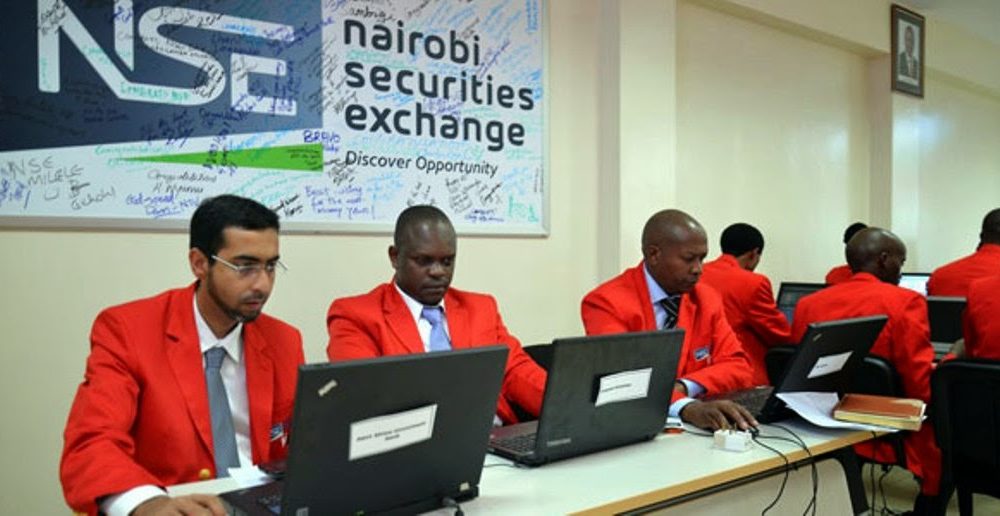
The GDRs are intended to be listed on the Nairobi Securities Exchange, creating a locally tradable instrument through which Kenyan investors can hold economic exposure to the Nigerian refinery.
The planned NSE listing, however, is not yet final.
Kenya’s Capital Markets Authority said the listing remains subject to relevant approvals from Nigeria’s Securities and Exchange Commission as well as the successful fundraising and allocation of sufficient shares to support creation of the GDRs.
The development marks an important cross-border expansion of Dangote Refinery’s share offer and demonstrates how African capital markets can be connected without requiring companies to conduct entirely separate conventional share offerings in each country.
Dangote Petroleum Refinery opened its IPO on September 14 with the offer scheduled to close on October 13.
The company is seeking $1.6 billion from investors as it moves to finance an expansion that would double the Lagos refinery’s processing capacity to 1.4 million barrels per day.
The offer could raise as much as $2.1 billion if oversubscribed, while $400 million has been underwritten by the refinery’s lead financial advisers.
Aliko Dangote said in September that investor demand for the offer had been “enormous,” with the share sale generating substantial interest among retail investors.
The Kenyan transaction potentially broadens that investor base by providing access to capital outside Nigeria through an instrument structured within Kenya’s regulatory system.
A GDR represents shares in a foreign company but can be held and traded through another market, allowing investors to gain exposure to the underlying company without directly acquiring and settling the original shares in its home market.
For Kenya, the transaction has significance beyond the Dangote offer itself.
The Capital Markets Authority said it is the first transaction of its kind since Kenya introduced its policy guidance governing Global Depository Receipts and Global Depository Notes.
Successful completion would therefore provide an early test of Kenya’s attempt to position its capital market as a gateway for cross-border African fundraising.
Renaissance Capital Kenya is not the only institution facilitating Kenyan participation.
The regulator said CPF Capital & Advisory, SBG Securities/Stanbic Bank, Francis Drummond & Co, National Bank of Kenya/Access Bank, Sterling Capital, Kestrel Capital and AXYS Investment Bank are also helping clients participate through relationships with authorised transaction parties in Nigeria.
The development comes days after Dangote broke ground on a separate $16 billion refinery project in Lamu, Kenya, designed to process 700,000 barrels of crude oil per day.
However, the Kenyan regulator stressed that the investment offer now available to Kenyan investors relates exclusively to Dangote Petroleum Refinery & Petrochemicals FZE in Nigeria.
It does not represent an equity offer in the planned Lamu refinery.
That distinction is particularly important because Dangote has separately offered regional governments a combined 30 percent interest in the Kenyan refinery project.
The Nigerian refinery IPO and the Lamu refinery investment are therefore separate transactions despite Dangote’s growing investment presence in Kenya.
Opening the Nigerian IPO to Kenyan investors also strengthens the wider capital-market relationship between West and East Africa at a time when African companies are seeking deeper pools of domestic and regional capital to finance large infrastructure and industrial projects.
If the GDRs ultimately secure approval and begin trading in Nairobi, Kenyan investors would gain exchange-based exposure to one of Nigeria’s largest privately owned industrial assets while Dangote Refinery would gain access to an investor base outside its domestic market.
For Dangote, the arrangement could become a model for extending ownership of the refinery across African markets without requiring separate primary listings of the company’s ordinary shares in every jurisdiction.
For African capital markets, the more significant development is the creation of a mechanism capable of directing savings from investors in one African country into large businesses operating in another.
The Kenyan regulator cautioned that its approval of the prospectus does not constitute a recommendation to invest and advised prospective investors to examine the offer documents and obtain independent professional advice before participating.