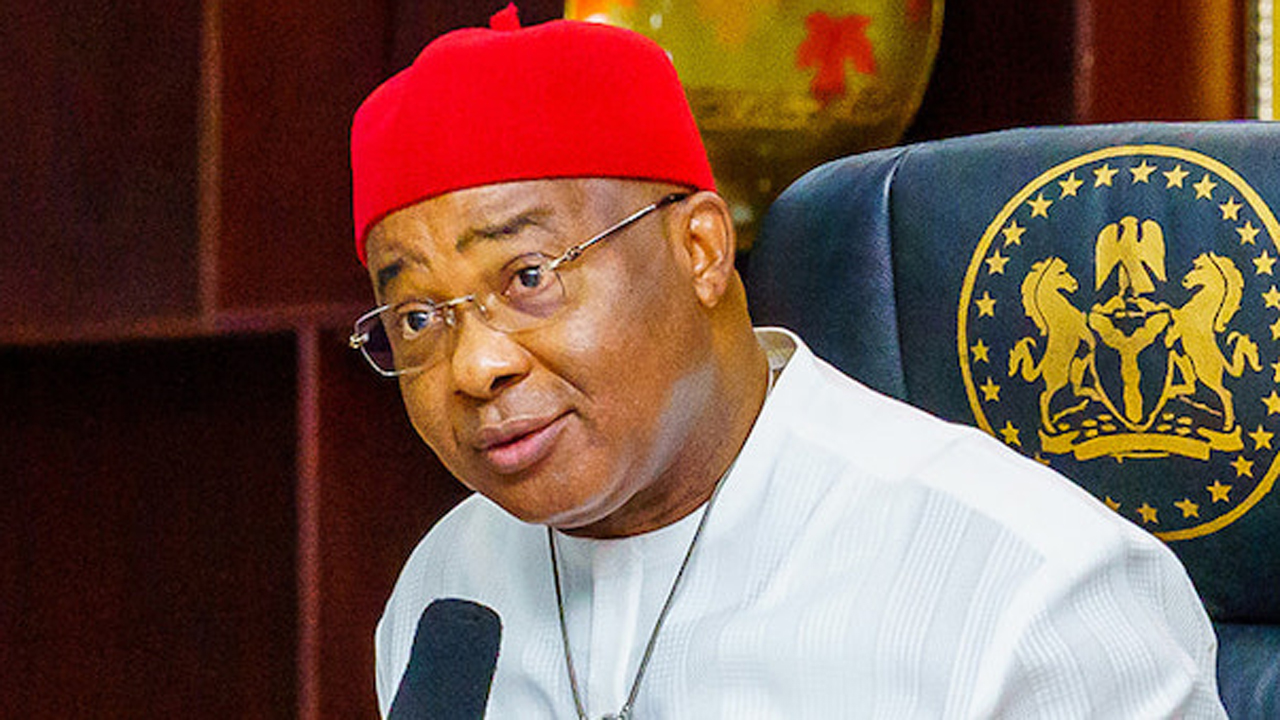
The Governor of Imo State, Hope Uzodimma, has admitted that Nigeria is yet to overcome its challenges, saying the country is still a work in progress.
Uzodimma, who is also the chairman of the Progressive Governors’ Forum, made this disclosure at the third Raymond Dokpesi Lecture in Abuja on Sunday.
According to him, President Bola Ahmed Tinubu’s reforms, including the removal of fuel subsidies and the liberalisation of the naira, have enabled the country to achieve economic stability.
However, he said that despite the economic reforms introduced by Tinubu’s administration, much still needs to be done to address the country’s challenges.
He identified food security, human capital development and the electoral process as areas requiring further improvement.
“Recent economic reforms, which ended the first subsidy regime and multiple currency exchanges, have all enabled the country to achieve more desirable economic stability, improved foreign reserves and undertaken major infrastructural projects across the continent.
“I have not mentioned these achievements to paint a picture of a new era, not at all. Our country is still a work in progress. We still have work to do, and we still have much to do in terms of infrastructure, especially power. Our unity sometimes feels fragile.
“The heightened problem of food security is still here with us. In addition, there is still room for improvement in key human development indicators, such as literacy, life expectancy, poverty and so on and so forth.
“Our democracy, especially the electoral process, could also be better, but we have surely come a long way. However, all hands must be on deck until we achieve the country of our dreams,” Uzodimma said.
He made the remarks while speaking on the theme of the lecture, “Media, Democracy and National Development.”
Earlier, the President of the Nigerian Institute of Public Relations, Dr Ike Neliaku, and the chairman of the lecture, Senator Adedayo Adeyeye, who is also the chairman of the Nigerian Ports Authority, praised Dokpesi’s contributions to the democratisation of Nigeria’s media ecosystem.