Nigeria’s economy expanded by 4.43 percent year-on-year in the second quarter (Q2) of 2026, accelerating from 4.23 percent in the corresponding period of 2025 and 3.89 percent in the first quarter of this year as stronger activity in telecommunications, agriculture and other services supported growth.
According to the National Bureau of Statistics (NBS), aggregate GDP at basic prices stood at N119.29 trillion in nominal terms during the quarter, compared with N100.73 trillion in Q2 2025, representing nominal growth of 18.43 percent.
The services sector remained the largest part of the economy, accounting for 56.62 percent of real GDP in the quarter, while agriculture contributed 26.15 percent and industry 17.23 percent.
Growth was broad-based but uneven across the major sectors.
Agriculture expanded by 4.39 percent in real terms, up from 2.82 percent in Q2 2025 and 3.15 percent in Q1 2026, indicating stronger activity across crop production, livestock, forestry and fishing.
The services sector also accelerated, growing 4.60 percent from 3.94 percent a year earlier, while industrial growth slowed to 3.96 percent from 7.46 percent in Q2 2025.
The non-oil economy grew by 4.31 percent, higher than 3.64 percent recorded in the second quarter of 2025 and 3.94 percent in the previous quarter.
NBS identified agriculture, telecommunications, real estate, trade, financial institutions, cement manufacturing and construction among the activities that supported non-oil growth during the period.
Telecommunications was one of the strongest contributors to the expansion.
Real output from Telecommunications and Information Services increased to N5.20 trillion in Q2 2026 from N4.71 trillion in the same period of 2025, an increase of about N488.9 billion.
The subsector grew 10.38 percent year-on-year, while its contribution to real GDP increased to 9.72 percent from 9.20 percent a year earlier.
Agriculture also provided a significant lift to overall output.
Crop production, the largest agricultural activity, grew 3.66 percent, while livestock expanded 6.92 percent. Forestry grew 4.88 percent and fishing increased 2.16 percent.
The oil sector also strengthened during the quarter as average crude production rose to 1.72 million barrels per day from 1.55 million barrels per day in Q1 2026 and 1.68 million barrels per day in Q2 2025.
Oil-sector real GDP grew 7.31 percent year-on-year, up from 2.57 percent in the preceding quarter, although the pace remained below the 20.46 percent growth recorded in Q2 2025. Its contribution to real GDP increased to 4.16 percent from 3.92 percent in Q1.
Manufacturing expanded by 3.24 percent in real terms, slightly below the 3.29 percent recorded in Q1 but above 1.60 percent in Q2 2025.
Within manufacturing, oil refining grew 43.94 percent and cement production expanded 12.75 percent, while chemical and pharmaceutical products increased 7.70 percent.
However, textile, apparel and footwear contracted 1.23 percent, while motor vehicles and assembly declined 1.02 percent, underscoring the uneven nature of the manufacturing recovery.
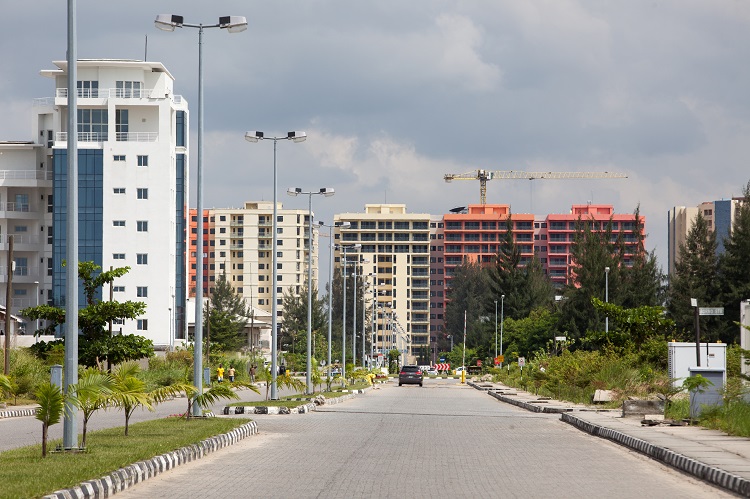
Construction recorded real growth of 6.75 percent, up from 5.27 percent a year earlier, while trade expanded 2.40 percent.
Finance and insurance grew 9.29 percent, with financial institutions expanding 8.35 percent and insurance growing 16.13 percent.
The information and communication sector grew 9.62 percent in real terms, supported mainly by telecommunications, while its contribution to real GDP increased to 11.74 percent from 11.18 percent in Q2 2025.
Real estate expanded 3.76 percent and contributed 12.71 percent to real GDP, making it one of the largest individual activities in the economy alongside trade, crop production and telecommunications.
Despite the stronger headline GDP growth, some sectors remained under pressure.
Electricity, gas, steam and air-conditioning supply contracted 10.63 percent year-on-year, following a 15.30 percent contraction in Q1. The sector had grown 11.47 percent in Q2 2025.
Other services also remained in contraction, declining 0.70 percent year-on-year, although the contraction was less severe than the 1.96 percent decline recorded in the previous quarter.
At constant 2019 basic prices, Nigeria’s real GDP increased to N53.47 trillion in Q2 2026 from N51.20 trillion in the same period of 2025, adding roughly N2.27 trillion in real economic output over the year.
The latest figures show that Nigeria’s expansion is being supported increasingly by services and agriculture, with telecommunications emerging as one of the strongest individual contributors to additional output.
At the same time, the slowdown in industry and contraction in electricity highlight structural weaknesses that could limit the pace at which stronger headline GDP growth translates into broader productive capacity.