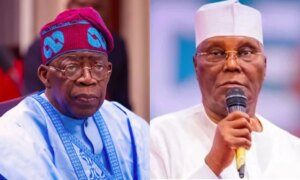
The African Democratic Congress, ADC, presidential candidate, Atiku Abubakar, on Sunday demanded a full explanation from President Bola Tinubu over his repeated absence from the United Nations General Assembly, UNGA
Atiku wondered whether the President’s documented history with United States law-enforcement agencies has become a burden on Nigeria’s foreign relations.
In a statement issued on Sunday by his Senior Special Assistant on Public Communication, Phrank Shaibu, Atiku said Tinubu stayed away from the 79th UNGA session in 2024, the 80th in 2025 and now the 81st in 2026, repeatedly sending Vice President Kashim Shettima to stand in for him.
He said three consecutive absences could no longer be dismissed as coincidence or routine delegation but constituted a pattern of presidential evasion requiring an honest explanation.
He said: “The United Nations General Assembly is one of the world’s most important diplomatic gatherings. It brings together the representatives of the UN’s 193 member states and provides a unique platform for presidents and prime ministers to defend their countries’ interests, negotiate partnerships and shape global decisions on trade, security and development.
“Vice President Shettima may represent Nigeria capably, but representation by delegation cannot permanently substitute for the personal authority, visibility and responsibility of the President.
“Tinubu cannot continue to treat Nigeria’s seat at the world’s biggest diplomatic table as though it were an inconvenient appointment that can be endlessly outsourced.
“Presidential absence on the global stage has consequences. UNGA is not merely a ceremonial gathering or an annual photo opportunity. Its sidelines are where leaders hold decisive bilateral meetings, court investors, negotiate trade partnerships, mobilise development finance and make the case for their countries.
“When a President makes himself absent from that stage for three consecutive years, his country loses opportunities. Investment does not follow silence. International capital does not pursue a country whose leader repeatedly abandons the room in which consequential economic relationships are being built.
“The cost is eventually transferred to ordinary citizens: fewer investments mean fewer businesses and fewer jobs. Reduced capital inflows place additional pressure on the local currency. A weaker naira raises the cost of imports, production, transportation and food. These are among the economic pressures now punishing Nigerian families through the worst cost-of-living crisis in living memory.
“Tinubu may consider attending UNGA a matter of personal prerogative, but the economic and diplomatic consequences of his absence are being paid by Nigerians. A President may surrender his seat, but a nation cannot escape the bill.”