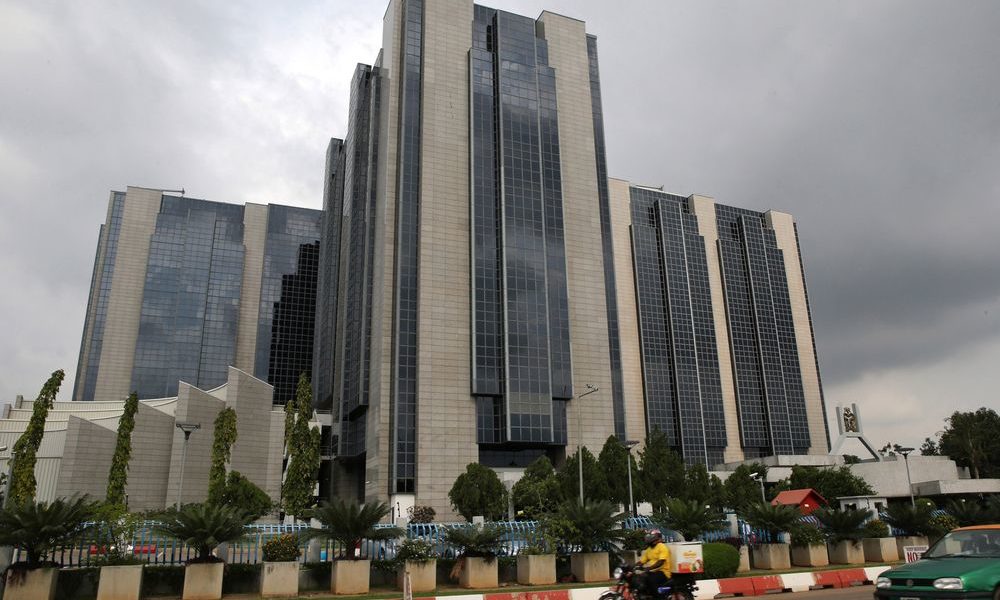
The Central Bank of Nigeria (CBN) is expected to retain its benchmark interest rate at 23% when its Monetary Policy Committee (MPC) concludes its two-day meeting on Tuesday, November 24, 2026, despite a sustained decline in inflation.
Financial analysts expect the apex bank to maintain its current monetary policy stance as concerns over exchange rate stability, rising money supply and potential inflationary pressures outweigh the immediate benefits of another interest rate reduction.
Nigeria’s headline inflation eased to 14.06% in October from 14.63% in September, according to the National Bureau of Statistics (NBS), marking the fifth consecutive monthly decline in the annual inflation rate.
Food inflation moderated to 19.13% from 19.59%, while core inflation, which excludes volatile agricultural produce and energy prices, declined to 10.78% from 12.95%.
The improvement has strengthened expectations of cheaper borrowing costs, particularly among businesses struggling with high financing expenses.
However, analysts believe the CBN may adopt a cautious approach to avoid undermining recent progress in controlling inflation and stabilising the foreign exchange market.
United Capital Research expects the committee to retain the Monetary Policy Rate (MPR) at 23%, citing rising liquidity, potential election-related spending and the need to assess the impact of its September monetary policy adjustment.
Nigeria’s broad money supply increased by 24% to N146.60 trillion in September 2026 from N117.78 trillion a year earlier, raising concerns that excess liquidity could renew inflationary pressures.
Standard Chartered Bank also expects the CBN to maintain the benchmark rate, pointing to renewed pressure on the naira, potential foreign portfolio investment outflows and uncertainty surrounding the sustainability of declining inflation.
Razia Khan, the bank’s Head of Research for Africa and the Middle East, identified exchange rate pressures and the possibility of increased pre-election spending as factors that could discourage further monetary easing.
Similarly, analysts at Parthian Securities believe the committee may prefer to assess economic developments before considering additional interest rate reductions.
The CBN reduced its benchmark interest rate by 350 basis points from 26.5% to 23% at its September meeting.
However, the bank described the adjustment as an operational recalibration intended to improve monetary policy transmission rather than the beginning of an aggressive interest rate reduction cycle.
For Nigerian businesses, retaining the benchmark rate at 23% would mean continued pressure on borrowing costs, particularly for manufacturers, small and medium-sized enterprises and other companies dependent on bank financing.
Although lower inflation could eventually create room for cheaper credit, commercial lending rates also depend on banks’ funding costs, liquidity requirements and assessments of borrowers’ creditworthiness.
Investors will also be watching the implications of the MPC’s decision for Treasury bill yields, government bonds and the foreign exchange market.
Maintaining the current policy rate could support demand for naira-denominated fixed-income securities, while an unexpected reduction may prompt investors to reassess returns across financial assets.
The committee’s decision on Tuesday will provide further direction on whether the CBN intends to maintain its cautious monetary policy approach or begin considering additional easing as inflation moderates.