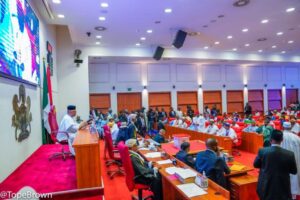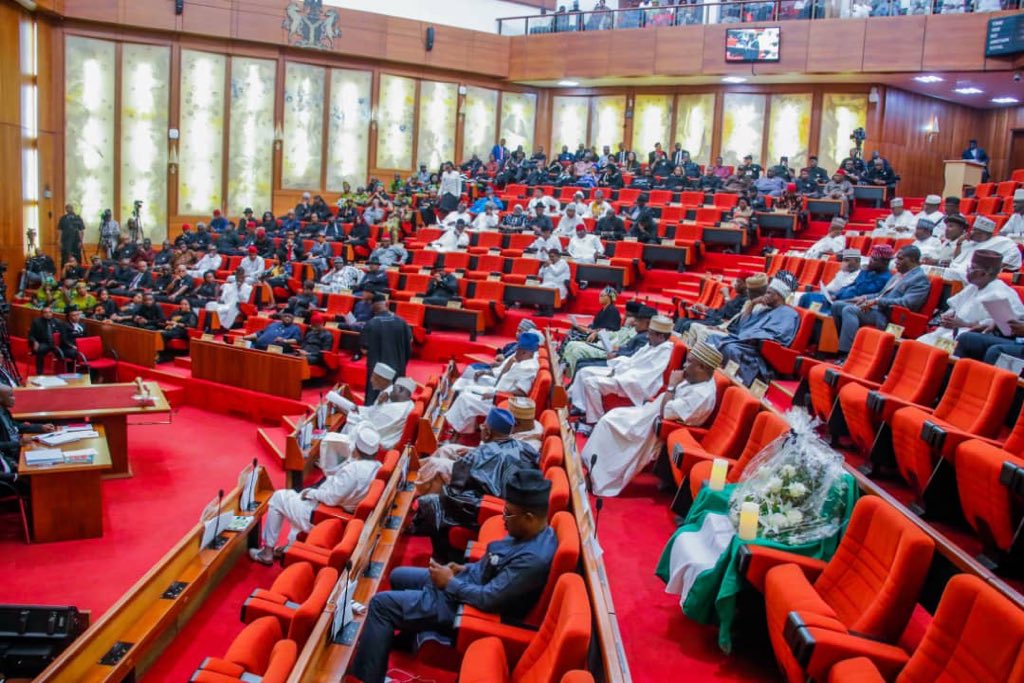
The call dominated debate as the Senate resolved to transmit the State Police Bill, otherwise known as the Sixth Alteration Bill, 2026, to President Bola Tinubu for assent after approval by the National Assembly and all 36 State Houses of Assembly.
Leading the debate, the Senate Leader, Senator Opeyemi Bamidele, said both chambers passed the amendment in June and July 2026 with the required two-thirds majority, while all 36 State Houses of Assembly subsequently approved it in line with Section 9 of the 1999 Constitution.
Senator Adams Oshiomhole, Edo North, led the push for safeguards, acknowledging long-standing fears that governors could deploy state police to intimidate opponents and persecute perceived enemies.
Drawing from his experience as a former governor, Oshiomhole admitted he had once shared those fears.
He argued, however, that the risk of abuse should not be used to deny Nigeria the benefits of decentralised policing at a time when kidnapping and violent crimes were worsening.
The lawmaker said the centralised structure had failed despite massive recruitment into the Police and military, given Nigeria’s size, population and the sophistication of criminal gangs.
He, therefore, proposed legislation that would spell out the respective responsibilities of Federal and State Police, establish clear areas of jurisdiction and prevent unnecessary clashes between the formations.
According to him, such a framework would regulate operations, ensure effective coordination and stop the two levels of policing from working at cross-purposes.
Senator Ekong Samson, Akwa Ibom South, backed the call, describing state police as a bold step for democracy but warning that its success would depend on strong checks.
Samson said concerns about governors abusing State Police were genuine and should not be dismissed.
He maintained that Nigeria needed a courageous and independent judiciary capable of checking abuse of power, protecting citizens’ rights and ensuring state police authorities operate within the law.
Without effective judicial oversight, he warned, the country might not derive maximum benefit from the new arrangement.
Other senators said decentralisation would bring security closer to the people, strengthen intelligence gathering and enable states to respond faster to local threats.
The Deputy Senate President, Senator Barau Jibrin, who chairs the Senate Committee on Constitution Review, said the new policing arrangement would complement rather than replace existing federal institutions.
He noted that successive administrations attempted to establish state police but failed to secure the required political and constitutional consensus.
The Senate approved two prayers: to transmit the Sixth Alteration Bill, 2026, to President Tinubu for assent, and to appreciate the President and urge him to forward the proposed National Policing Bill to provide the operational framework.
The Senate President, Senator Godswill Akpabio, clarified that the constitutional amendment already provides for an Act of the National Assembly to establish modalities for State Police and regulate their relationship with the Federal Police.
He said the proposed legislation would address jurisdictional conflicts, operational procedures, coordination and possible abuses raised by Oshiomhole and Samson, describing the 36 out of 36 endorsements by State Houses of Assembly as an extraordinary national consensus and a historic achievement of the 10th National Assembly.