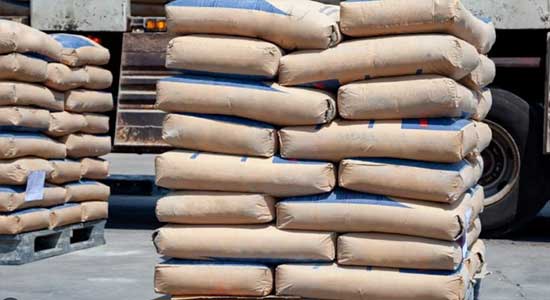
(Cement. Photo by The Nigeria Lawyer)
Nigeria’s competition watchdog has flagged concerns about possible manipulation of cement prices following a three-month investigation.
The Federal Competition and Consumer Protection Commission found that the high prices of cement cannot be fully explained by market conditions alone.
The investigation was triggered by widespread public complaints about rising cement costs.
The commission’s Anticompetitive Practices Department compared Nigeria’s cement market with those of Kenya, Tanzania, South Africa, Egypt, Morocco, Algeria and Togo.
They examined factors including limestone availability, population, production capacity, consumption and retail prices.
Nigeria has substantial limestone deposits and annual cement production capacity of between 60 million and 65 million tonnes, but only consumes about 25 million to 30 million tonnes per year.
Despite this excess capacity, cement prices have been rising consistently.
In January, a 50-kilogramme bag sold for between 9,300 and 9,700 naira.
By mid-year, the price had jumped to between 10,500 and 13,000 naira.
By July, prices had climbed further to between 13,000 and 15,000 naira in some areas.
The commission found that cement costs less in other African countries.
In Kenya, which has about 58.6 million people and much lower cement demand than Nigeria, a 50-kilogramme bag costs about 5.40 dollars, or roughly 7,344 naira.
In Tanzania, with about 66.3 million people and similar demand, cement sells for about 4.80 dollars, or 6,528 naira.
In Togo, which doesn’t even have limestone deposits, a bag costs about 6.75 dollars, or 9,180 naira.
These price differences raise questions about why Nigeria’s significant production capacity and abundant raw materials haven’t pushed prices down like they would in a truly competitive market.
Cement manufacturers have attributed the high prices to energy costs, depreciation of the naira currency, imported machinery and spare parts, and transportation expenses.
However, the commission said it is testing these explanations against actual data on production costs, pricing and market conditions.
The commission has launched a formal investigation and issued orders demanding that major cement players provide records about their pricing methods, production levels, capacity use, exports and business relationships.
They want to determine whether prices are being driven by legitimate costs or by anti-competitive practices such as companies coordinating with each other, abusing market power, restricting supply or using unfair distribution methods.
The executive head of the commission, Tunji Bello, said the investigation was necessary because cement is strategically important to Nigeria’s economy.
He stressed that cement prices affect the cost of building homes, developing property, delivering public infrastructure and doing business generally.
Bello said the investigation was not aimed at stopping companies from making legitimate profits but at ensuring that prices are determined by genuine competition rather than unlawful conduct that restricts it.
The investigation comes as rising cement prices have increased costs for construction projects and housing across the country.