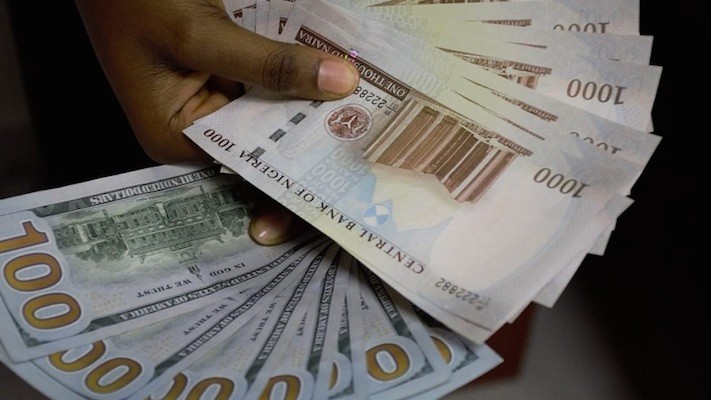
Nigeria’s use of foreign exchange nearly doubled to $50.93 billion in 2025 as businesses, financial institutions and importers increased demand for dollars across the economy.
The latest Central Bank of Nigeria (CBN) data showed that foreign exchange utilisation rose 91.1 percent from $26.65 billion recorded in 2024, taking annual utilisation to its highest level since 2019.
The increase was not driven principally by merchandise imports.
Transactions classified as invisibles accounted for $30.99 billion, or about 61 percent of all foreign exchange utilised during the year, while import-related transactions accounted for $19.94 billion.
A year earlier, invisible transactions amounted to $11.11 billion, meaning the category increased by almost $20 billion within 12 months.
The sharp increase highlights a significant change in the composition of demand in Nigeria’s foreign exchange market with payments connected to financial and business services accounting for a growing share of dollars passing through the system.
Financial Services Account for Largest Share
Financial services emerged as the biggest component of invisible foreign exchange utilisation in 2025.
The sector accounted for $20.30 billion, almost double the $10.76 billion recorded in the previous year.
Business services also recorded a substantial increase, rising to about $5.45 billion from $702 million in 2024.
Other service-related transactions accounted for approximately $3.51 billion.
Combined, the figures show that Nigeria’s demand for foreign currency increasingly extends beyond companies seeking dollars to bring physical goods into the country.
Payments for services and financial transactions now represent a major component of activity in the formal foreign exchange market.
This distinction is important because a rise in FX utilisation does not necessarily mean Nigeria imported substantially more physical products.
Instead, the data indicate that a significant portion of the additional dollars was used for transactions that do not involve merchandise entering the country.
Import Demand Rises to $19.94bn
Demand for dollars to finance imports also increased, although at a considerably slower pace than invisible transactions.
Import-related FX utilisation rose to $19.94 billion in 2025 from $15.54 billion in 2024.
Industrial companies accounted for the largest portion, using approximately $8.60 billion compared with $6.96 billion a year earlier.
The oil sector recorded $4.73 billion in utilisation, more than double the $2.26 billion recorded in 2024.
Manufactured products accounted for $2.69 billion, while food imports consumed approximately $2.36 billion.
Foreign exchange utilisation by the transport sector increased to $677.51 million from $458.58 million, while agriculture accounted for $208.87 million compared with $155.96 million previously.
The industrial figures underline Nigeria’s continuing dependence on foreign currency for machinery, raw materials, intermediate goods and other inputs required by domestic companies.
Even where goods are eventually manufactured locally, producers frequently need dollars to purchase equipment and inputs from overseas suppliers.
Dollar Usage Remains Strong Throughout 2025
Foreign exchange utilisation remained above $12 billion in every quarter of 2025.
Businesses and other users utilised $12.71 billion during the first quarter before the figure increased to $13.13 billion in the second quarter.
Utilisation moderated to $12.01 billion during the third quarter before recovering to $13.08 billion in the final three months of the year.
The relatively consistent quarterly figures suggest that the increase was not concentrated in a single period.
Instead, demand remained elevated throughout the year as companies gained greater access to foreign currency through the formal market.
That represents a significant change from periods when dollar shortages prevented businesses from meeting legitimate FX requirements even when demand existed.
FX Inflows Rise Alongside Demand
The increase in dollar utilisation occurred alongside an improvement in foreign exchange inflows.
Nigeria received aggregate FX inflows of $109.86 billion in 2025, up 13.81 percent from $96.53 billion in the previous year.
Outflows increased faster, rising 27.83 percent to $49.05 billion from $38.37 billion.
Despite the increase in money leaving the system, Nigeria finished the year with net FX inflows of $60.81 billion, compared with $58.16 billion in 2024.
The combination of rising inflows and higher utilisation suggests that more foreign currency was available to meet transactions that previously could have been delayed, rationed or pushed outside formal channels.
This is an important distinction when interpreting the 91.1 percent increase.
Higher utilisation represents greater demand for dollars, but it can also indicate that the financial system has become more capable of actually supplying foreign currency when businesses require it.
Nigeria Builds Larger External Buffer
Nigeria’s external position has strengthened further in 2026.
Foreign exchange reserves crossed $54 billion in early September, providing the CBN with a larger buffer against external shocks and periods of heightened demand.
Activity in the official FX market has also demonstrated a greater capacity to process large transactions.
Spot transactions exceeded $5 billion during the week ended August 21, the highest weekly level recorded so far in 2026, before turnover subsequently moderated.
The naira has meanwhile traded around the N1,300 range against the dollar in the official market in recent sessions.
Stronger reserves and improved market liquidity have helped reduce some of the severe dollar shortages that previously disrupted corporate planning and prevented foreign investors from easily repatriating capital.
Rising Demand Still Presents a Structural Challenge
The latest numbers also underline a longer-term challenge for Nigeria.
A country can accommodate increasing foreign exchange utilisation sustainably when dollar earnings expand alongside demand.
Problems emerge when demand for foreign currency consistently grows faster than the economy’s ability to generate dollars through exports, investment, remittances and other external receipts.
Nigeria therefore remains dependent on its ability to expand oil production while developing stronger non-oil sources of foreign exchange.
The composition of the 2025 utilisation figures makes that challenge particularly important.
More than $30 billion went to invisible transactions, while industrial companies, petroleum businesses, manufacturers and food importers continued to require billions of dollars for overseas purchases.
Reducing pressure on the currency over the longer term will therefore require more than increasing the amount of dollars available in the market.
Nigeria will also need to expand domestic productive capacity and foreign currency earnings sufficiently to meet an economy whose demand for international goods, services and financial transactions is growing.
For now, the rise to $50.93 billion shows a foreign exchange market processing substantially more legitimate demand than it did a year earlier.
The more consequential question is whether Nigeria can continue increasing the supply of dollars fast enough to accommodate that demand without renewed pressure on the naira and external reserves.