By Kazeem Ugbodaga
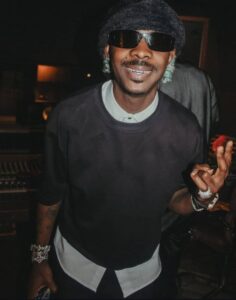
Former Vice President Atiku Abubakar has offered to support the education of Yusuf Aliyu, the teenage artisanal miner whose video from a gold-rich community in Niger State has gone viral.
Atiku said he had watched Aliyu’s video repeatedly and was deeply moved by the teenager’s intelligence, confidence and clarity, arguing that a child with such potential should be in school rather than struggling for survival.
In a statement shared on Sunday, Atiku said he did not see Aliyu as an “illegal miner” but as a Nigerian child whose potential had been constrained by poverty.
He said he was prepared to support the boy’s education and ensure that his abilities were not lost to deprivation.
“I cannot look at him and see an ‘illegal miner.’ I see a Nigerian child failed by the country that should have protected him,” Atiku said.
He stated that Aliyu’s situation raised broader questions about poverty and the distribution of benefits from Nigeria’s mineral resources, particularly in communities where valuable deposits exist alongside severe deprivation.
Atiku asked how communities sitting on gold could remain so poor that children lacked access to quality education and opportunities.
He added that the wealth extracted from such communities should translate into classrooms, livelihoods and better living conditions rather than leave residents trapped in poverty.
The former vice president also appealed for the safety of Aliyu and his family, warning that the attention generated by the video should not expose them to intimidation or retaliation.
He said any effort to reach the teenager should be handled through his family and appropriate child-protection channels.
Atiku also used the development to criticise the Federal Government’s approach to artisanal mining, contrasting the current crackdown with the Presidential Artisanal Gold Mining Development Initiative (PAGMI) established under former President Muhammadu Buhari.
He said PAGMI was designed to register, train and integrate artisanal miners into the formal economy, with Niger State among the states covered by the initiative.
According to Atiku, the Tinubu administration inherited the framework but has instead confronted vulnerable miners through raids, detention and criminalisation.
“Buhari saw people to formalise. Tinubu sees poor people to criminalise,” he said.
Atiku further linked Aliyu’s story to the deaths of 37 suspected illegal miners who died while in the custody of the Nigeria Security and Civil Defence Corps (NSCDC) in Niger State.
He called on the government to explain what happened to PAGMI in Niger State and demanded answers over the deaths in custody.
The deaths, confirmed by Niger State Governor Mohammed Umaru Bago, followed the arrest of suspected illegal miners during NSCDC operations in the M.I. Wushishi and Lukoto areas of the state on September 15 and 16. Authorities have launched investigations into the circumstances surrounding the deaths.
The Federal Government has constituted a 10-member independent committee to investigate the incident and suspended officers involved pending the outcome of the probe. The committee has two weeks to submit its report.
The cause of the deaths has not been conclusively established. The NSCDC initially referred to a suspected disease outbreak, while survivors and other reports have raised concerns about overcrowding and ventilation in the detention facility.
Atiku said Aliyu’s story should therefore serve as a reminder of the need to address the conditions that push children and vulnerable people into dangerous artisanal mining activities.
He said the teenager’s intelligence demonstrated the potential that exists among children in deprived communities, arguing that poverty should not determine whether such children get an education or a future.
“As a father, a grandfather and a Nigerian, I refuse to look away,” Atiku said, adding that he would continue to speak for children whose opportunities were being limited by poverty.
He said that the mineral wealth beneath such communities should be used to build schools and create livelihoods, rather than become associated with deprivation and loss of lives.