
Residents and other stakeholders have called for stronger grassroots interventions in the 2027 Lagos State budget, with particular emphasis on support for children living with disabilities, youth vocational development and programmes that address the needs of vulnerable groups.
The calls came as the Lagos State Government concluded its five-day Y2027 Budget Consultative Forum with engagements in Ikorodu and Epe, completing consultations across the five divisions of the State.
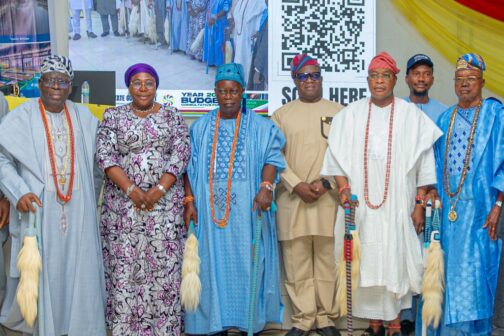
At the Epe session held at the Jubilee Chalet, traditional rulers formally presented their proposals to representatives of the State Government, outlining development priorities they want considered in the preparation of the 2027 budget.
For residents who participated in the consultations, however, the engagement provided an opportunity to move beyond broad development demands and draw government’s attention to specific challenges affecting families, young people and children.
A mother of a child with a spinal cord condition, Mrs Bolanle Mustapha, appealed for greater government support for children living with disabilities, particularly in education and vocational training.
Mustafa said some children with disabilities were facing difficulties accessing schools and obtaining the learning materials they needed.
“Some of our children are going to school and they need school learning materials in school but they couldn’t get any and some of them are not being accepted in school and they want to learn,” she said.
She also explained that her own child, having completed secondary education and taken up vocational training, needed tools to continue learning the trade, but that the cost was beyond what she could afford.
“My child is done with secondary school and also learning a vocational job but needs tools for learning at work which I’m not financially capable to buy. We want the Government to our aid,” she said.
Mustapha, who identified herself as a member of the Spinal Cord Injuries Association of Nigeria, said caring for children with spinal cord-related conditions and other disabilities could be financially demanding for families.
“We want the Government to help these children so they can become something in future,” she added.
Representing the Youth, Public Relations Officer, National Youth Council of Nigeria, Lagos State Chapter, Victor Kolade Adobajale, urged the government to broaden youth-focused interventions to cover both employed and unemployed young people, as well as graduates and those who are outside formal education.
According to him, inclusion should extend beyond graduate-focused programmes to provide practical opportunities for young people without formal tertiary education.
“We also recognize the fact that we have others that are not in school and they are not graduates. So, we are yearning for vocational trainings for those who do not have the opportunity to be formally educated,” Adobajale said.
He further advocated the integration of vocational training into the secondary-school curriculum, arguing that young people should leave school with practical skills that could help them earn a living.
“We also yearn for vocational training to be part of the curriculum of our secondary school, so that young people don’t just leave school and go into higher institutions without having something they can do,” he said.
The concerns raised by residents were reinforced by the Social Policy Manager, UNICEF Nigeria, Lagos Office, Mr Mohammed Okorie, who described citizen participation as an important component of effective budget planning.
Okorie said government could better understand residents’ priorities when they are directly involved in determining what should be reflected in public spending.
“I think this is the right way to go because the best thing is really to involve the people in planning for them because they know their priorities, and know what they need,” he said.
According to him, the consultation also provided an opportunity for government to return to residents and explain how their requests from previous budget cycles had been addressed.
“So when you get this information from them on their priorities, you know how to include it into the budget,” Okorie said, adding that government’s feedback on previous requests demonstrated both “inclusiveness” and “accountability.”
He also drew attention to the importance of ensuring that children’s needs were adequately represented in the budget process, particularly those who could not speak for themselves.
“For us as UNICEF, we’re very interested in how much the interest of children is covered in all of this,” he said.
Okorie identified areas including child health, nutrition, water, sanitation and hygiene, education, immunisation and malnutrition as issues requiring attention as the State plans its next budget.
He noted that children were critical to the present and future of Lagos, stressing the need for participants in the consultation to speak for children who were not present to articulate their own needs.
The Permanent Secretary, Ministry of Economic Planning and Budget, Mrs Olayinka Ojo, had similarly described the consultations as an opportunity for government to return to the people with evidence of progress on projects and programmes arising from previous engagements.
She said the process was about “feedback, accountability and evidence-based engagement,” explaining that requests made by stakeholders would be documented, reviewed and subjected to prioritisation before being considered as interventions.
The Commissioner for Economic Planning and Budget, Mr Ope George, had earlier explained that the divisional consultations form part of the process of preparing the 2027 budget, with the ministry returning to communities to give an account of previous requests while also receiving fresh priorities for the next budget cycle.
The engagements in Ikorodu and Epe also provided an update on infrastructure projects being implemented in the two divisions.
In Epe, projects highlighted included road interventions and infrastructure aligned with the Lagos State Development Plan 2052, as well as developments around the approved new Lekki Airport. Other projects listed were Mogaji Street in Erepoto, Hon. Sanni Road in Iraye, Epe, Kayode Adesanya Street and the ongoing Omu Creek Link Road and Bridge, Phase 1, in Ibeju-Lekki.
In Ikorodu, work was reported to be progressing on the Igbogbo-Baiyeku Road, including grading and compaction of the crushed stone base and sand bed, while drainage desilting and bailing of water from the carriageway were also ongoing. Renovation of a failed section of Oba Sekunmade Road was also listed among the interventions.
The five-day consultations were organised to update stakeholders on the half-year performance of the 2026 budget, explain government’s plans for the remainder of the year and its focus areas for 2027, while receiving inputs, contributions and suggestions towards the preparation of the 2027 budget.
