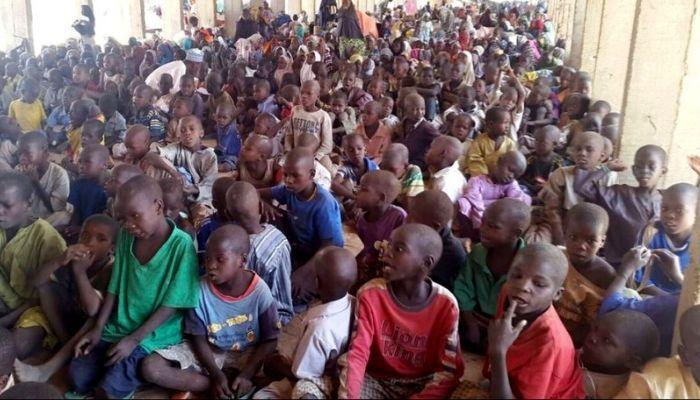
Child Rights Advocate, Eghosa A Erhumwunse has decried the rising number of children entering residential care not because they have no families, but because their families are overwhelmed by poverty, displacement and lack of support.
Erhumwunse raised the concern on Tuesday at the National Alternative Care Consultative Forum in Abuja.
He noted that although Nigeria has good child protection laws, including the Child Rights Act and the National Guidelines for Alternative Care, having good policies is not the same as having a functioning system.
“Too many children still enter residential care because families are overwhelmed by poverty, displacement, disability, conflict, abuse, neglect or lack of support,” he said.
Erhumwunse who is the National Director of SOS Children’s Villages Nigeria asserted that gatekeeping remains inconsistent, social workers are overstretched, data is fragmented, financing is inadequate and children are still excluded from decisions affecting them.
He disclosed that at the end of 2025, only five states formally adopted the National Guidelines into state practice, describing it as progress but also a sign of the scale of work ahead.
He challenged stakeholders, including the Federal Ministry of Women Affairs, 36 state directors of child welfare, the EU, UNICEF, Save the Children, Plan International and members of the judiciary, to move from policy to implementation.
“Alternative care reform is not simply about moving children out of institutions. It is about building a system strong enough to prevent unnecessary separation in the first place. Every child deserves a family, every child deserves protection, every child deserves to be heard,” he added.
He said the success of the two-day forum would not be measured by speeches but by state-specific, time-bound commitments that are realistic, measurable, resourced and owned.
In her remarks, the Minister of Women Affairs, Hajiya Imaan Sulaiman-Ibrahim maintained that every child born under the Nigerian sky deserves to grow up in safe, loving and protective family environment.
She expressed concern over the lack of accurate data on children in orphanages and alternative care homes across the country and directed state permanent secretaries to profile all orphanages and provide actual number of children in their care.
Sulaiman-Ibrahim said the government would put in place measures from ward to local government and sub-national levels to protect children.
Also speaking, the UNICEF Child Protection Specialist, Dr Godwin Odo, argued that adopting policy alone does not change children’s lives, adding that implementation does.
Odo said the forum came at critical moment, as evidence showed that children thrive best in families and communities.