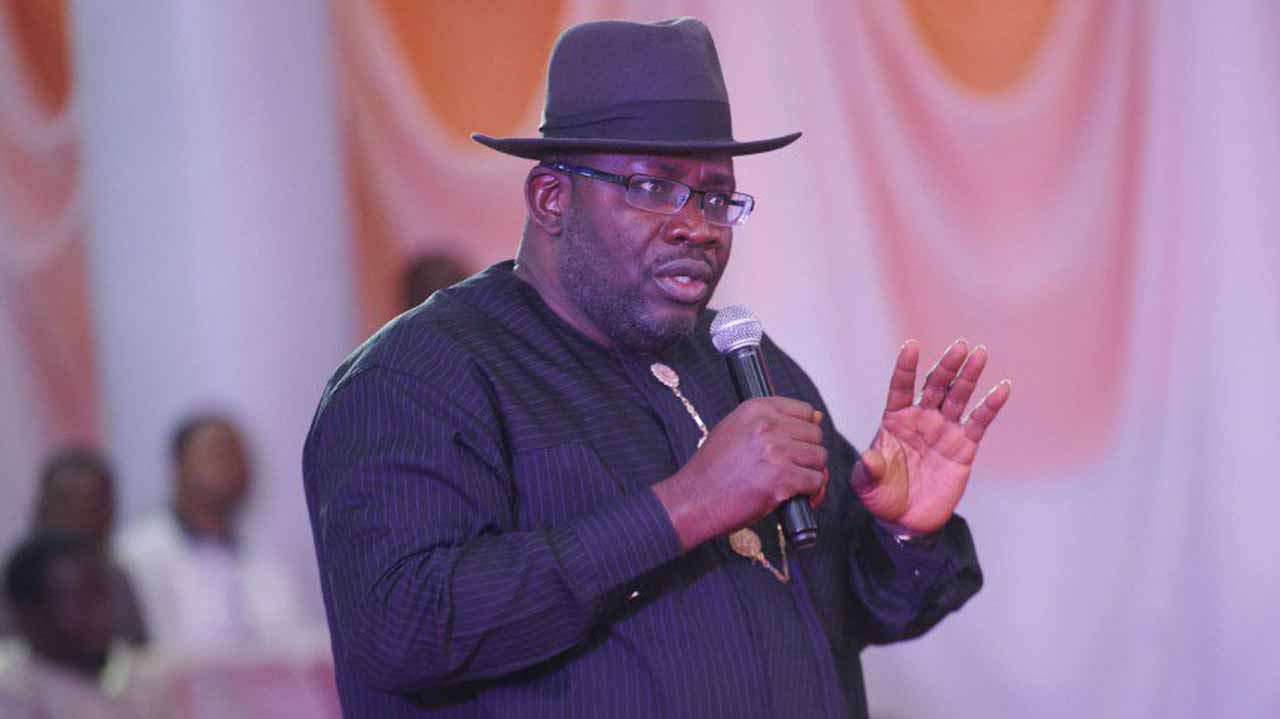
He emphasised that swimming skills alone could not guarantee survival during boat accidents, particularly when operators and passengers disregard basic safety precautions.
“It is not enough that we know how to swim. If a boat designed to carry 200 passengers is overloaded with 600 or 700 people, that is a recipe for disaster,” he said.
Dickson further urged traditional rulers and community leaders to take responsibility for educating residents on the importance of observing maritime safety procedures.
He noted that government agencies, boat operators, traditional institutions and members of the public must work together to ensure that safety regulations are respected.
The senator also praised security personnel, safety officials and emergency responders for their efforts during the rescue and recovery operations.
However, he argued that the recurring dangers associated with water transportation in Bayelsa could not be separated from the poor state of road infrastructure across many riverine communities.
According to him, the absence of accessible roads has left residents with little choice but to depend on boats for virtually every journey, exposing them to unnecessary risks.
Recalling his administration’s efforts to improve transportation infrastructure in the state, Dickson highlighted the Nembe-Brass road initiative undertaken through a partnership involving the Niger Delta Development Commission, NDDC, and Shell.
He also referenced the commencement of the Oporoma road project, which his administration initiated despite the financial challenges confronting the state at the time.
While welcoming the current administration’s continuation of the Oporoma road and bridge project, he maintained that additional road construction initiatives were needed to open up other neglected communities.
Specifically, he called for the extension of the Oporoma road to Ukubie and Koloama, the expansion of the Ekeremor road towards Agge and renewed commitment to the Nembe-Brass road project.
Dickson insisted that the responsibility of connecting isolated communities should not rest solely on the Bayelsa State Government, urging the Federal Government to increase its infrastructure investment in the Niger Delta.
He acknowledged the Vice President’s visit to Bayelsa following the boat accident but appealed to the All Progressives Congress-led Federal Government to back its show of concern with tangible development projects.
The senator called for the extension of major road and bridge construction initiatives to Bayelsa and other Niger Delta communities, similar to projects being executed in other parts of the country.
He maintained that improved road networks would ease the pressure on waterways and give residents safer alternatives for travelling between communities.
“We are riverine people, and travelling by water is part of our way of life. Our waterways are beautiful, and river transportation can be an enjoyable experience.
“But it should be an option for leisure and convenience, not a necessity imposed on our people because there are no roads,” he said.
Dickson stressed that the Ayama/Oweikorogha boat tragedy should serve as a warning to governments and relevant stakeholders about the urgent need to strengthen maritime safety measures and address the infrastructure deficit in the state’s riverine areas.
He concluded by praying for the peaceful repose of those who lost their lives and the full recovery of the injured, while calling on the government and residents to work together to prevent similar tragedies in the future.